What Is Uninsured Motorist Coverage and Do You Need It?
Uninsured motorist coverage can help protect you when a driver without enough insurance causes an accident. Learn how UM and UIM coverage work, what they may pay for, and whether you should consider adding them to your policy.
What Is Uninsured Motorist Coverage and Do You Need It?
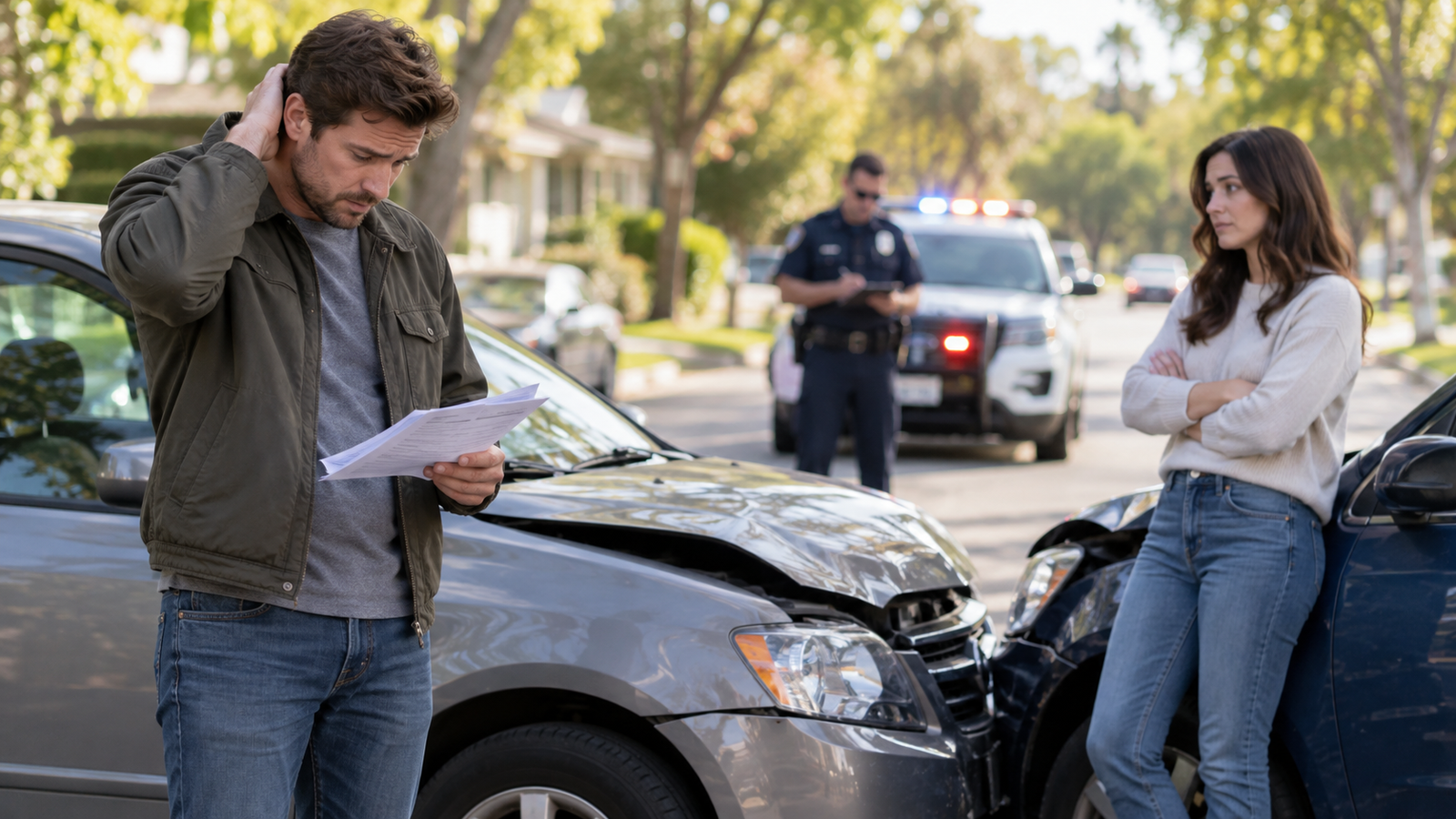
Imagine you are stopped at a red light.
Another driver crashes into the back of your car.
The accident is clearly their fault.
You expect their insurance to pay for the damage and injuries.
Then you discover something unexpected:
The other driver has no auto insurance.
Now what?
This is the type of situation where uninsured motorist coverage may become extremely important.
Uninsured motorist coverage, often called UM coverage, is designed to help protect you when an at-fault driver does not have enough applicable auto insurance to pay for certain losses.
A related coverage called underinsured motorist coverage, or UIM, may help when the other driver has insurance but their limits are too low to cover the full amount of a qualifying loss.
Whether you need UM or UIM coverage depends on your state, policy, finances, existing protection, and the amount of financial risk you are comfortable carrying yourself.
The important thing is to understand what the coverage actually does before deciding whether to keep, add, reduce, or reject it.
What Does Uninsured Motorist Coverage Mean?
Uninsured motorist coverage is protection for situations where another driver causes a covered accident but does not have applicable liability insurance.
Normally, when another driver causes an accident, their liability insurance may help pay for covered injuries or property damage they caused.
But what happens when that driver has no insurance?
Without another source of coverage, you could be left trying to recover money directly from the driver.
That can be difficult.
The person may not have enough assets or income to pay for:
- Medical bills
- Lost income
- Vehicle damage
- Other accident-related losses
Uninsured motorist coverage can provide another layer of protection through your own policy, subject to the coverage you purchased and your state's rules.
What Is Underinsured Motorist Coverage?
Underinsured motorist coverage deals with a slightly different problem.
The other driver has insurance.
But they do not have enough insurance.
Imagine another driver causes a serious accident.
Your qualifying losses total $100,000.
But the at-fault driver's applicable liability limit is only $25,000.
There may be a large gap between what their insurance can pay and the amount of the covered loss.
Underinsured motorist coverage may help with some of that difference, subject to your limits, policy terms, state rules, and how the coverage is structured.
This is why UM and UIM are often discussed together.
They deal with two different versions of the same problem:
The at-fault driver's insurance is not enough.
Uninsured vs Underinsured Motorist Coverage
The difference is simple.
Uninsured Motorist Coverage
The at-fault driver has no applicable insurance.
Underinsured Motorist Coverage
The at-fault driver has insurance, but their available coverage is not enough for the qualifying loss.
A policy may include one or both types of protection depending on the state and insurer.
What Can Uninsured Motorist Coverage Pay For?
The answer depends on the type of UM coverage you have.
There are two important categories to understand.
Uninsured Motorist Bodily Injury
Uninsured motorist bodily injury coverage may help with covered injury-related losses after a qualifying accident with an uninsured driver.
Depending on the policy and state, these may involve things such as:
- Medical expenses
- Lost wages
- Certain injury-related losses
- Other damages allowed under the policy and law
This protection can be particularly important after a serious accident because medical and income-related losses can become much larger than the cost of repairing a vehicle.
Uninsured Motorist Property Damage
Some policies or states may also offer uninsured motorist property damage, often shortened to UMPD.
This can help with covered damage to your vehicle or other insured property caused by an uninsured driver.
Availability, limits, and deductibles can vary.
Some states may not offer UMPD in the same way others do.
This is why you should check your own policy rather than assuming your uninsured motorist coverage automatically includes vehicle damage.
Does Uninsured Motorist Coverage Pay for Your Car?
Sometimes, but not always.
This is one of the most important points to understand.
Having uninsured motorist bodily injury coverage does not automatically mean your vehicle damage is covered.
Vehicle damage may instead be handled by:
- Uninsured motorist property damage
- Collision coverage
- Another applicable coverage
depending on your policy and state.
If you already carry collision coverage, that coverage may help with covered damage to your vehicle regardless of whether the at-fault driver has insurance, subject to the deductible and policy terms.
If you want to understand collision coverage better, read Collision vs Comprehensive Insurance: What’s the Difference?
Does Uninsured Motorist Coverage Have a Deductible?
It depends on the type of coverage and your state.
Uninsured motorist bodily injury may work differently from property-damage coverage.
Uninsured motorist property damage may have a deductible in some situations.
Collision coverage also commonly has its own deductible.
Do not assume all UM claims work the same way.
Check your declarations page or ask your insurer:
- Does my UM coverage have a deductible?
- Does UMPD have a separate deductible?
- What deductible applies after a hit-and-run?
- Would collision coverage apply instead?
If deductibles are confusing, read What Is a Car Insurance Deductible and How Does It Work?
Is Uninsured Motorist Coverage Required?
It depends on where you live.
State insurance requirements vary.
Some states may require insurers to include or offer certain uninsured motorist coverage.
Some states may require drivers to carry it.
Others may allow the policyholder to reject or reduce it, sometimes through a written acknowledgment.
This is why there is no correct nationwide answer to:
“Is uninsured motorist coverage required?”
You need to look at the requirements in your own state and the options shown on your policy.
Why Would You Need Uninsured Motorist Coverage?
Because having your own insurance does not guarantee that every other driver on the road has enough insurance.
Imagine you have excellent coverage.
You drive carefully.
You have never caused an accident.
Then someone else runs a red light and seriously injures you.
Your safe driving did not cause the problem.
The other driver's insurance situation now becomes important.
If they have no insurance, uninsured motorist protection can potentially give you another source of recovery through your own policy.
Without it, your options may be more limited.
Do You Need UM Coverage If You Have Health Insurance?
Health insurance and uninsured motorist coverage do not necessarily protect against the same things.
Health insurance may help with eligible medical treatment.
But an auto accident can create other financial losses.
Depending on your policy and state, uninsured motorist bodily injury coverage may potentially address losses beyond what your health insurance handles.
There may also be:
- Health insurance deductibles
- Copays
- Out-of-network costs
- Lost income
- Other accident-related losses
So having health insurance does not automatically make uninsured motorist coverage unnecessary.
Look at how all of your coverage works together.
What If the Uninsured Driver Has No Money?
This is one of the practical reasons UM coverage exists.
Technically, you may have a legal claim against the driver who caused the accident.
But winning a judgment does not necessarily mean the person has money available to pay it.
Imagine an uninsured driver causes $75,000 in qualifying losses.
If that person has very little income and few assets, collecting the full amount directly can be extremely difficult.
Insurance can provide a more practical source of protection when appropriate coverage exists.
What Happens If an Uninsured Driver Hits You?
First, focus on safety.
If you are involved in an accident:
- Check for injuries
- Call emergency services when necessary
- Contact police when required or appropriate
- Exchange information
- Take photographs if safe
- Get witness information when available
- Record the other vehicle's details
- Contact your insurer
Tell your insurance company that the other driver may be uninsured.
Your insurer can explain which parts of your own policy may apply.
Do not assume there is no coverage simply because the other driver has no insurance.
What Happens If the Other Driver's Insurance Is Expired?
If the other driver's policy was no longer active when the accident occurred, they may effectively be uninsured for that loss.
This could create a potential uninsured-motorist situation depending on the circumstances and your policy.
Your insurer will normally investigate the insurance status.
Do not rely only on an insurance card shown at the accident scene.
A card can exist even when a policy has expired or been canceled.
What If the Other Driver Gives You Fake Insurance Information?
Contact your insurer and provide everything you have.
This can include:
- Driver name
- License information
- License plate
- Vehicle details
- Photographs
- Police report
- Insurance information they provided
If their supposed insurance cannot be verified, your insurer can investigate whether your uninsured-motorist protection may become relevant.
Does Uninsured Motorist Coverage Apply to Hit-and-Run Accidents?
It may, but hit-and-run rules vary considerably by state and policy.
Imagine another vehicle hits your car and drives away.
You never identify the driver.
The situation may potentially be treated similarly to an uninsured-driver claim under certain coverage.
However, different rules may apply to:
- Bodily injury
- Vehicle damage
- Physical contact requirements
- Police reporting
- Deadlines
- Deductibles
Some policies or states may handle the vehicle damage through collision coverage instead.
If you experience a hit-and-run, report it promptly and ask your insurer exactly which coverage applies.
Does UM Coverage Apply If You Are a Pedestrian?
Depending on the policy and state, uninsured motorist bodily injury protection may potentially apply in certain situations where an insured person is struck by an uninsured vehicle while walking.
It may also potentially apply in some other situations involving an insured person rather than only while sitting inside the insured vehicle.
But coverage definitions vary.
Check who qualifies as an insured person under your policy.
Can Uninsured Motorist Coverage Protect Passengers?
It may.
Passengers occupying your insured vehicle may potentially qualify for protection under uninsured motorist bodily injury coverage, subject to the policy.
This can be particularly important when several people are injured in one accident.
However, policy limits matter.
A policy may have:
- Per-person limit
- Per-accident limit
Understanding both is important.
What Do UM Limits Mean?
Suppose your uninsured motorist bodily injury limit is shown as:
100/300
That commonly represents:
$100,000 maximum for one person's covered bodily injury.
$300,000 maximum for covered bodily injuries in one accident.
This is a simplified example.
Policy structures vary, so read your declarations page carefully.
Higher limits can provide more protection but can also increase the premium.
Should Your UM Limits Match Your Liability Limits?
In some situations and states, uninsured motorist limits may be connected to the liability limits you choose.
A driver may decide that protecting themselves against an uninsured driver is just as important as carrying strong liability limits for injuries they could cause to others.
For example, someone carrying $100,000/$300,000 bodily injury liability may want to compare similar UM/UIM limits if available.
Whether that makes sense for you depends on:
- State rules
- Available options
- Budget
- Assets
- Income
- Existing protection
Do not automatically choose the lowest UM limit simply to save a small amount without understanding what protection is being reduced.
What Is Stacked Uninsured Motorist Coverage?
In some states and policies, drivers may encounter the term stacking.
Stacking can allow certain UM or UIM limits from multiple covered vehicles or policies to be combined in qualifying situations.
For example, if two vehicles each have certain uninsured motorist limits, stacking may potentially increase the total protection available.
But stacking is highly dependent on state law and policy wording.
Some states allow it.
Others restrict it.
Some policies may contain anti-stacking provisions where permitted.
Do not assume your coverage stacks unless the policy or insurer confirms it.
What Is Non-Stacked Coverage?
Non-stacked uninsured motorist coverage generally limits the available protection to the applicable coverage on one vehicle or policy rather than combining limits.
The exact difference can be important when insuring several vehicles.
Ask your insurer:
- Is my UM coverage stacked?
- Is stacking allowed in my state?
- How would my limits work with multiple vehicles?
- What does stacked coverage cost compared with non-stacked coverage?
What Is UMPD?
UMPD stands for Uninsured Motorist Property Damage.
It is designed to help with covered property damage caused by an uninsured driver.
For a car owner, this usually means damage to the insured vehicle.
But availability varies.
A state may allow UMPD with specific limits.
Another state may rely more heavily on collision coverage.
A deductible may apply.
Hit-and-run rules may also differ.
Do not confuse UMPD with uninsured motorist bodily injury.
They protect against different losses.
UMPD vs Collision Coverage
These two coverages can sometimes seem similar because both may potentially help with damage to your vehicle.
But there are important differences.
Collision Coverage
Can generally apply to covered collision damage to your vehicle regardless of whether the other driver is insured.
Uninsured Motorist Property Damage
Typically focuses on qualifying damage caused by an uninsured driver.
Collision coverage can therefore be broader for crash damage.
However, premiums, deductibles, limits, and claim handling may differ.
Some drivers carry both.
Do You Need UM Coverage If You Have Collision Insurance?
Collision coverage mainly deals with your vehicle.
Uninsured motorist bodily injury coverage deals with injury-related losses.
So having collision coverage does not necessarily make UM bodily injury protection unnecessary.
Imagine an uninsured driver seriously injures you and totals your car.
Collision coverage may help with your vehicle.
But it is not designed to replace uninsured motorist bodily injury coverage for qualifying injury-related losses.
Different coverages solve different problems.
Do You Need UM Coverage If You Have Full Coverage?
The phrase “full coverage” can be misleading.
People commonly use it to mean:
- Liability
- Collision
- Comprehensive
But that does not automatically mean UM or UIM is included.
A driver can say:
“I have full coverage.”
and still have different uninsured motorist limits, or potentially no optional UM/UIM coverage where rejection is allowed.
Always check the actual policy.
Never rely on the words “full coverage” alone.
What If the At-Fault Driver Has Only Minimum Liability Insurance?
This is where underinsured motorist coverage may become especially important.
Imagine the at-fault driver has only a relatively low bodily injury liability limit.
Your injuries are serious.
Their insurer pays up to the available qualifying limit.
But significant covered losses remain.
If you carry underinsured motorist coverage, it may potentially help with qualifying losses beyond the at-fault driver's available insurance, subject to your policy and state rules.
Does UIM Pay Everything the Other Insurance Does Not?
Not necessarily.
Underinsured motorist coverage is not simply an unlimited account that pays every remaining dollar.
Your own UIM limit matters.
The way your state calculates UIM benefits matters.
Policy definitions and exclusions matter.
The amount already paid by the at-fault driver's insurer can also affect the calculation.
If a serious accident occurs, ask your insurer to explain exactly how your UIM limit works.
What If Both Drivers Share Fault?
Shared-fault rules vary by state.
If you were partially responsible for an accident, that could affect what you are able to recover.
Uninsured or underinsured motorist benefits may also be affected by applicable fault rules.
Do not assume that UM coverage always pays the full amount simply because the other driver lacked insurance.
Can You Use UM Coverage If the Other Driver's Insurer Denies the Claim?
Possibly in certain situations, but a denied liability claim does not automatically turn every accident into an uninsured motorist claim.
Why the claim was denied matters.
For example, there can be a difference between:
- No active insurance policy
- Driver excluded from coverage
- Vehicle not covered
- Policy cancellation
- Disputed liability
Your insurer may need to investigate whether the other vehicle qualifies as uninsured under your policy definition.
Can UM Claims Increase Your Premium?
Possibly, depending on the state, insurer, claim, and applicable rating rules.
A UM claim may be treated differently from an at-fault collision because you were not necessarily responsible for the accident.
Some states may restrict how insurers use certain not-at-fault claims in pricing.
However, there is no universal rule that every UM claim can never affect insurance.
For a broader explanation, read Does Filing a Car Insurance Claim Increase Your Premium?
How Much Does Uninsured Motorist Coverage Cost?
There is no universal price.
The premium can depend on:
- State
- Coverage limit
- Number of vehicles
- Driver profile
- Insurer
- Whether UIM is included
- Whether stacking is available
- Other policy factors
The best way to understand the cost is to ask your insurer for two versions of the quote:
One with your preferred UM/UIM limits.
And one with lower or different limits.
Then you can see the actual price difference.
Is Uninsured Motorist Coverage Worth It?
For many drivers, it deserves serious consideration.
Think about the financial risk.
Suppose another driver causes a major accident and has no insurance.
Would you be financially comfortable paying for the consequences yourself?
Consider:
- Medical insurance deductibles
- Lost income
- Long-term injuries
- Vehicle damage
- Other qualifying losses
If the answer is no, UM/UIM protection may be valuable.
The decision should be based on the protection you need rather than simply finding the cheapest possible policy.
When UM Coverage May Be Especially Important
It can deserve additional consideration if:
- You drive frequently
- You commute long distances
- You have valuable income to protect
- You carry strong liability limits
- You regularly transport family members
- You want more protection against uninsured drivers
- Replacing lost income after an injury would be difficult
- Your health insurance leaves significant out-of-pocket costs
Again, this does not mean every person needs identical limits.
Your finances and risk tolerance matter.
Should You Reject Uninsured Motorist Coverage to Save Money?
Before rejecting or reducing it, calculate how much you are actually saving.
Imagine reducing UM/UIM protection saves only a modest amount each policy period.
Now compare that savings with the financial exposure created by a serious accident with an uninsured driver.
Sometimes the premium savings may not be large enough to justify the reduction in protection.
But every driver's budget is different.
Ask for the exact price difference before deciding.
What Questions Should You Ask Your Insurance Company?
Before buying or changing coverage, ask:
- Do I currently have uninsured motorist coverage?
- Do I have underinsured motorist coverage?
- Are bodily injury and property damage separate?
- What are my limits?
- Does a deductible apply?
- Does my state require this coverage?
- Can I reject it?
- Does my policy cover hit-and-run accidents?
- Is stacking available?
- Does collision coverage overlap with UMPD?
- Are household members protected?
- Are passengers protected?
- What happens if I am injured as a pedestrian?
These questions can make your policy much easier to understand.
Uninsured Motorist Coverage vs Liability Insurance
These coverages protect against opposite sides of an accident.
Liability Insurance
Helps protect you financially when you are legally responsible for covered injuries or property damage to others.
Uninsured Motorist Coverage
Can help protect you when another qualifying driver causes an accident and does not have enough applicable insurance.
Think of it this way:
Liability helps protect others from a loss you cause.
UM/UIM can help protect you from certain losses another inadequately insured driver causes.
Uninsured Motorist Coverage vs Comprehensive Insurance
These coverages are also very different.
Comprehensive insurance generally protects your vehicle from certain non-collision events such as:
- Theft
- Hail
- Fire
- Vandalism
- Falling objects
Uninsured motorist coverage focuses on qualifying accidents involving drivers who lack sufficient insurance.
A stolen vehicle is generally a comprehensive issue.
A crash caused by an uninsured driver may create a UM issue.
Uninsured Motorist Coverage vs Medical Payments Coverage
Medical payments coverage, where available, may help with certain medical expenses for you and passengers after an accident regardless of fault.
UM bodily injury coverage has a different purpose and may address a broader set of qualifying losses depending on state law and policy terms.
These coverages can sometimes work alongside each other.
Do not assume one automatically replaces the other.
Can Someone Else Driving Your Car Use Your UM Coverage?
Potentially, depending on who qualifies as an insured person under your policy and the circumstances.
If another permitted driver is using your vehicle and is injured by an uninsured motorist, your policy's UM coverage may become relevant.
But driver status matters.
If you regularly allow someone else to use your vehicle, make sure they are properly disclosed where required.
For more information, read Does Car Insurance Cover Someone Else Driving Your Car?
What Happens After an Uninsured Motorist Accident?
The process may include several steps.
Report the Accident
Notify police where required and contact your insurer.
Confirm the Other Driver's Insurance
Your insurer may investigate whether the driver actually had active coverage.
Document Your Loss
Keep:
- Medical records
- Repair estimates
- Photographs
- Police report
- Lost-income documentation
- Other relevant records
Cooperate With the Investigation
Your insurer may need to determine fault and confirm that the other driver meets the policy's definition of uninsured.
Review Your Limits
Understand how much UM or UIM protection your policy provides.
Frequently Asked Questions
What is uninsured motorist coverage?
Uninsured motorist coverage can help protect you after a qualifying accident caused by a driver who does not have applicable auto liability insurance.
What is underinsured motorist coverage?
Underinsured motorist coverage may help when an at-fault driver has insurance but their coverage is not enough for a qualifying loss.
Does uninsured motorist coverage pay for your car?
It may if you have uninsured motorist property damage coverage. Collision coverage may also apply to covered vehicle damage. UM bodily injury alone does not necessarily cover your car.
Does uninsured motorist coverage cover hit-and-run accidents?
It may, depending on your state and policy. Hit-and-run rules can differ for bodily injury and vehicle damage.
Is uninsured motorist coverage required?
It depends on the state. Some states require it or require insurers to offer it, while others may allow drivers to reject certain coverage.
Do I need uninsured motorist coverage if I have health insurance?
Health insurance may help with medical treatment, but it does not necessarily replace all protections potentially available through UM bodily injury coverage.
Do I need uninsured motorist coverage if I have collision insurance?
Collision coverage primarily protects your vehicle after covered crashes. UM bodily injury protects against qualifying injury-related losses, so the coverages serve different purposes.
Is underinsured motorist coverage the same as uninsured motorist coverage?
No. UM generally addresses drivers without applicable insurance, while UIM addresses drivers whose available insurance is insufficient.
Can uninsured motorist coverage increase my premium?
Adding coverage can increase the premium because you are buying additional protection. A UM claim's effect on future pricing depends on state and insurer rules.
Is uninsured motorist coverage worth having?
It can be valuable if you want financial protection against drivers who have no insurance or inadequate coverage. The right limits depend on your budget, state, financial situation, and existing insurance.
What Is Uninsured Motorist Coverage and Do You Need It? The Bottom Line
Uninsured motorist coverage exists because you cannot control whether every other driver on the road has adequate insurance.
You may drive safely.
You may carry strong insurance.
You may follow every rule.
And another driver can still cause a serious accident without enough coverage to pay for the consequences.
UM coverage may help when the responsible driver has no applicable insurance.
UIM coverage may help when the responsible driver has insurance but not enough.
Whether you should buy it depends on your state, budget, financial situation, policy, and the amount of risk you are willing to handle yourself.
Before making the decision, check:
Your current UM/UIM limits.
Whether bodily injury and property damage are separate.
Whether your state requires the coverage.
Whether hit-and-run accidents qualify.
Whether stacking is available.
And how much the coverage actually adds to your premium.
Do not reject useful protection simply because you do not completely understand it.
Ask questions first.
Compare the cost.
Then make the decision based on the financial protection your household actually needs.
For more information, read What Does Auto Insurance Cover?, Collision vs Comprehensive Insurance: What’s the Difference?, What Is a Car Insurance Deductible and How Does It Work?, or explore our Insurance Calculators for additional tools.