Does Car Insurance Cover Someone Else Driving Your Car?
Does car insurance cover someone else driving your car? Learn how permissive use, household drivers, excluded drivers, liability, collision, and comprehensive coverage may apply when another person uses your vehicle.
Does Car Insurance Cover Someone Else Driving Your Car?
You lend your car to a friend.
They drive to the store.
A few minutes later, they call and tell you they have been in an accident.
Now you have an important question:
Does car insurance cover someone else driving your car?
In many situations, your auto insurance may provide coverage when another person drives your vehicle with your permission.
But it is not automatic in every situation.
Coverage can depend on:
- Your insurance policy
- Who was driving
- Whether you gave permission
- Whether the driver lives with you
- Whether the driver is listed on your policy
- Whether the driver is excluded
- Why they were using the car
- Their license status
- Your state
- The type of coverage you purchased
This is why the safest answer is not simply:
“Yes, anyone can drive your car.”
The better answer is:
Your policy may cover another permitted driver, but you need to understand the rules and exclusions in your actual policy.
Does Car Insurance Follow the Car or the Driver?
This is one of the most common questions in auto insurance.
In many situations, certain types of auto insurance coverage are connected primarily with the insured vehicle.
That means your policy may respond when someone else drives your car with permission.
However, insurance does not always follow one simple rule.
The driver's own policy may also become relevant.
Your policy limits matter.
The reason the car was being used matters.
And the driver's relationship to you can matter.
So instead of thinking:
“Insurance always follows the car,”
it is better to think:
The vehicle owner's insurance may be the first place to look, but the exact outcome depends on the policy and situation.
What Is Permissive Use?
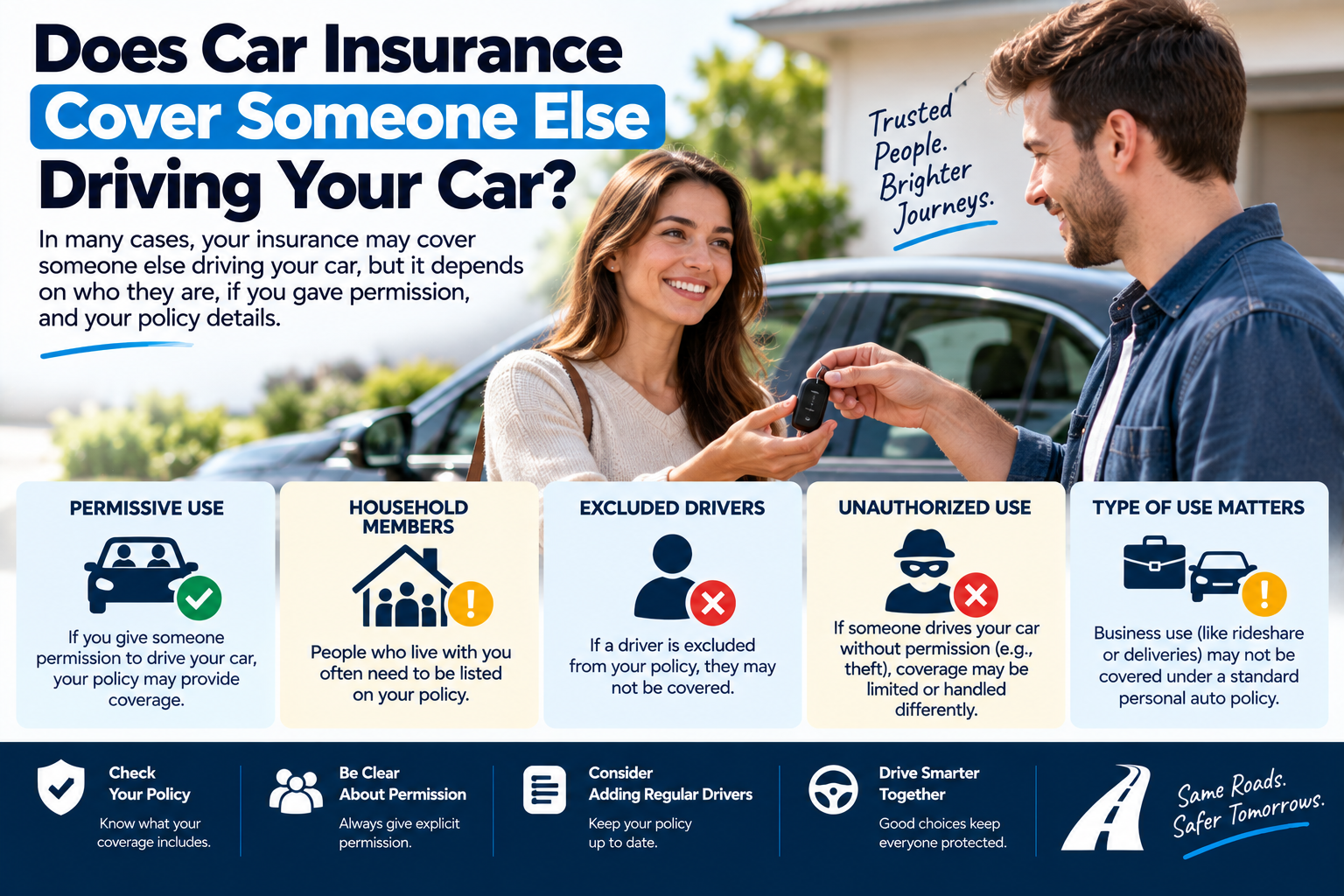
Permissive use generally means someone drives your car after you have given them permission.
For example:
Your friend asks to borrow your vehicle to go shopping.
You say yes.
Your sibling uses your car for an afternoon with your permission.
A visiting relative drives your vehicle to a restaurant after asking you first.
These are examples of situations that may fall under permissive use.
Many personal auto policies provide some level of protection for occasional permissive drivers.
But the exact coverage can differ by insurer and state.
Some policies may limit coverage for drivers who are not listed.
Others may have special rules for household members.
Always check your policy before regularly lending your vehicle to someone.
Please check Below..
https://bestcarandautoinsurance.com/does-filing-a-car-insurance-claim-increase-your-premium
What Happens If Your Friend Crashes Your Car?
Suppose you lend your car to a friend.
Your friend causes an accident.
Several types of insurance coverage may become relevant.
Damage to Another Person's Car
Your property damage liability coverage may help pay for covered damage your friend caused while driving your insured vehicle, depending on the policy.
Injuries to Other People
Your bodily injury liability coverage may also become relevant if your permitted driver causes covered injuries to others.
Damage to Your Own Car
If you carry collision coverage, it may help pay for covered damage to your vehicle, subject to your deductible and policy terms.
If you only carry liability coverage, your own vehicle may not have collision protection.
This is why understanding your actual policy matters.
For a broader explanation, read What Does Auto Insurance Cover?
Who Pays First If Someone Else Crashes Your Car?
This can depend on the policies and circumstances.
In many situations, the insurance attached to the vehicle may be the first policy considered.
If the damages exceed available limits, the driver's own auto insurance may potentially become relevant depending on the circumstances and policies.
But you should not assume there is always a simple “primary then secondary” rule that works identically everywhere.
State law and policy wording can affect how coverage is coordinated.
If a serious accident occurs, report it to your insurer and provide accurate information about who was driving and why.
What If Someone Borrows Your Car Only Once?
Occasional borrowing is generally different from someone using your vehicle every day.
Imagine your neighbor's car is being repaired.
They borrow your car once to pick up groceries.
That is a very different situation from someone driving your vehicle to work five days a week for six months.
Insurance companies may expect regular drivers to be disclosed and, when required, added to the policy.
If another person frequently uses your vehicle, do not assume they can remain an unnamed occasional driver forever.
Ask your insurer how regular use should be handled.
What If the Driver Lives With You?
Household members deserve special attention.
If someone lives in your home and regularly has access to your vehicle, the insurer may expect that person to be disclosed on the policy.
Examples can include:
- Spouse
- Partner
- Teenage child
- Adult child
- Parent
- Sibling
- Roommate
Rules differ by insurer and state.
A household member who regularly drives your car may need to be listed as a driver.
Failing to disclose a regular household driver can create problems when a claim occurs.
What If Your Teenager Drives Your Car?
A licensed teenager living in your household usually should not be treated like a random occasional guest.
If your teenager regularly drives the family vehicle, notify your insurance company.
Young drivers can significantly affect insurance pricing because they have less driving experience.
The insurer may require the teenager to be added to the policy once licensed or once they regularly operate the vehicle.
If you are comparing coverage for a younger household driver, our Best Car Insurance for Young Drivers guide can help you understand additional considerations.
What Is an Excluded Driver?
An excluded driver is someone specifically excluded from coverage under a policy where exclusions are allowed.
This is extremely important.
Suppose your policy identifies a household member as an excluded driver.
You then allow that person to drive your car.
If they cause an accident, your policy may provide little or no coverage for that event depending on the exclusion and applicable law.
An excluded driver should not be treated like an ordinary permissive driver.
If someone is excluded from your policy, do not let them drive the vehicle without first understanding the consequences.
What If Someone Drives Your Car Without Permission?
Unauthorized use can create a different insurance situation.
Imagine someone takes your vehicle without your permission.
You did not lend it to them.
You did not authorize the trip.
The way coverage works may be different from normal permissive use.
The facts matter.
There can also be a major difference between:
A stranger stealing your car.
And:
A family member using the vehicle when you told them not to.
If your vehicle is stolen, comprehensive coverage may become relevant.
For more information, read What Would Happen If Your Car Were Stolen and You Didn't Have Auto Insurance?
What If the Driver Does Not Have Their Own Car Insurance?
Someone does not necessarily need to own a separate auto policy for your vehicle's insurance to potentially apply when they drive your car with permission.
For example, a friend who does not own a vehicle may still occasionally drive your insured car.
But that does not mean every uninsured driver is automatically protected.
Their license status, regular access to the vehicle, household relationship, policy terms, and other factors can matter.
If a person will drive your vehicle regularly, contact your insurer rather than assuming occasional-driver rules will continue to apply.
What If the Driver Has Their Own Auto Insurance?
If the person borrowing your car has their own auto insurance, their policy may potentially become relevant depending on the claim.
For example, your insurance may respond first, while the driver's insurance could potentially provide additional coverage in some situations.
But this should not be assumed.
The exact interaction between policies depends on:
- Coverage types
- Limits
- State rules
- Policy wording
- Fault
- Circumstances of the accident
After an accident, provide both insurers with accurate information if requested.
What If Your Friend Is Not Listed on Your Policy?
Not being listed does not automatically mean there is no coverage.
An occasional permissive driver may still be covered under many policies.
The bigger concern is usually whether the person actually qualifies as an occasional driver.
If they:
Live with you,
use the vehicle frequently,
or have regular access to it,
the insurer may expect them to be disclosed.
Do not intentionally leave a regular driver off the policy simply to avoid a higher premium.
That can create serious problems later.
What If Someone Drives Your Car Every Day?
Regular use should generally be discussed with your insurer.
Imagine your brother borrows your car every weekday for work.
At that point, they are not really an occasional driver.
The insurer may need to know that they regularly operate the vehicle.
This can affect:
- Premium
- Driver rating
- Coverage
- Eligibility
- Underwriting
It is better to update the policy before an accident rather than explain the situation afterward.
What If Someone Drives Your Car for Work?
Business use can change the situation significantly.
A standard personal auto policy may not cover every type of commercial or business activity.
Examples that deserve extra attention include:
- Food delivery
- Package delivery
- Rideshare driving
- Commercial transportation
- Regular business deliveries
Allowing a friend to drive your car to their office is different from allowing them to use it for paid delivery work all day.
If your vehicle is used for business purposes, tell your insurer and make sure the policy is appropriate for that use.
What If Someone Uses Your Car for Uber or Lyft?
Do not assume a normal personal auto policy automatically covers rideshare activity.
Rideshare driving can involve different insurance rules depending on whether the app is off, the driver is waiting for a request, traveling to pick up a passenger, or carrying a passenger.
If someone uses your car for rideshare work, confirm that appropriate coverage is in place.
A normal “I gave them permission to drive” situation may not be enough.
Does Collision Insurance Cover Someone Else Driving Your Car?
It may.
If your policy includes collision coverage and another permitted driver damages your vehicle in a covered collision, collision coverage may help with the damage according to the policy.
Your deductible can still apply.
For example:
Repair cost: $6,000
Collision deductible: $500
Potential covered amount after deductible: $5,500
This is a simplified example.
Actual claim payments depend on the policy and damage assessment.
To understand deductibles better, read What Is a Car Insurance Deductible and How Does It Work?
Does Comprehensive Insurance Work When Someone Else Is Driving?
Comprehensive coverage protects against certain non-collision events.
Examples can include:
- Theft
- Hail
- Fire
- Vandalism
- Falling objects
- Certain animal-related damage
Whether someone else happened to be using the vehicle may not be the central issue in the same way it would be in an at-fault collision.
However, the exact claim still depends on the policy and circumstances.
Read Collision vs Comprehensive Insurance: What's the Difference? if you want a simple explanation of both coverages.
Does Liability Insurance Cover Another Driver Using Your Car?
Liability insurance may cover a permitted driver in certain circumstances when they cause injury or property damage while using your insured vehicle.
But the amount of protection can depend on your policy.
Some policies may provide reduced limits for drivers who are not listed.
Others may have restrictions.
Never assume that every person who drives your car receives exactly the same liability limits you do.
Check the policy or ask your insurer.
Who Pays the Deductible If Your Friend Crashes Your Car?
The insurance company usually does not decide which person in your household or friendship should personally reimburse the deductible.
If your policy's collision coverage handles the damage, your policy deductible may apply.
For example:
Your friend crashes your car.
You have a $1,000 collision deductible.
Your policy covers the loss.
You may be responsible for that $1,000 as the policyholder.
Whether your friend agrees to reimburse you is generally a separate matter between you and that person.
This is one practical reason to think carefully before lending your vehicle.
Will Your Insurance Premium Increase If Someone Else Crashes Your Car?
It can.
Even though you were not driving, a claim may still be made under your policy.
Whether your premium increases depends on factors such as:
- Who was at fault
- Claim amount
- Type of claim
- Driver
- Your previous claims
- State rules
- Insurer practices
- Discounts
- Accident forgiveness
There is no universal increase.
If you want a detailed explanation, read Does Filing a Car Insurance Claim Increase Your Premium?
Will the Accident Go on Your Record or Their Record?
Potentially both types of insurance history can become relevant.
The driver may have the accident associated with their driving history.
Your policy may also show a claim because your insured vehicle and insurance were involved.
That does not necessarily mean both people receive identical insurance consequences.
The driver and vehicle owner have different insurance profiles.
What If Your Friend Gets a Speeding Ticket in Your Car?
Traffic tickets generally follow the driver who committed the violation rather than automatically becoming your ticket because you own the vehicle.
If your friend is stopped for speeding while driving your car, the citation normally relates to their driving behavior.
However, certain automated enforcement situations and local rules may operate differently.
The ticket itself and an insurance claim are separate issues.
What If Your Friend Was Texting While Driving?
If a friend receives a distracted-driving citation while using your car, the violation generally relates to the person driving.
If texting also causes an accident involving your insured vehicle, then both the traffic violation and the insurance claim may become relevant.
For more detail on distracted driving and insurance pricing, see How Much Does a Texting While Driving Ticket Increase Auto Insurance Premiums?
What If the Driver Has No Valid License?
Allowing an unlicensed or suspended driver to use your car can create serious problems.
Insurance coverage may be limited or denied depending on the policy and circumstances.
There may also be legal consequences.
Before lending your vehicle, make sure the person has a valid driver's license.
Do not assume your insurance will protect you simply because the car itself is insured.
What If the Driver Is Drunk?
Allowing an impaired driver to use your vehicle can create extremely serious legal and insurance consequences.
Coverage questions become much more complicated when illegal conduct is involved.
Most importantly, never knowingly allow someone who is impaired to drive your car.
Find another way home.
Call a rideshare service, taxi, friend, or family member.
The financial consequences of an accident are secondary to the risk of serious injury or death.
Can Someone Borrow Your Car for a Road Trip?
Potentially, yes, if your policy permits the driver and use.
But a long road trip deserves more thought than a five-minute trip to a store.
Before lending your vehicle, check:
- Is the driver licensed?
- Do they have your permission?
- Are they excluded from the policy?
- Are they allowed to drive under your policy?
- Is the vehicle covered outside your home state?
- Do you have roadside assistance?
- Are they taking the vehicle into another country?
For international travel, coverage can change significantly depending on the destination.
Ask your insurer before the trip.
What If Someone Borrows Your Car and Takes It to Another State?
Personal auto insurance generally does not stop existing simply because your vehicle crosses a state line within the United States.
However, legal requirements can differ between states.
Your policy may adjust in certain ways to satisfy applicable minimum requirements.
For unusual or extended travel, it is still wise to confirm coverage with your insurer.
Can a Roommate Drive Your Car?
Maybe, but do not automatically treat a roommate like an occasional guest.
Because a roommate lives in your household and may have regular access to your vehicle, your insurer may require information about them.
Some companies may require household residents to be listed, rated, or formally excluded where allowed.
If your roommate ever drives the car, explain the situation to the insurer.
Can Your Spouse Drive Your Car?
A spouse living with you will normally be an important household driver for insurance purposes.
They may need to be listed on the policy.
Do not assume that marriage automatically creates coverage regardless of how the policy is written.
Make sure your insurer has accurate household information.
Can Your Adult Child Drive Your Car?
An adult child who lives with you and regularly drives the vehicle may need to be listed on your policy.
An adult child who lives elsewhere and only borrows the car occasionally may be treated differently.
The exact answer depends on:
- Residence
- Frequency of use
- Vehicle access
- Their own insurance
- Your insurer's rules
Ask your insurer if you are unsure.
What If You Let Someone Drive but They Let Another Person Take the Car?
This is sometimes called second-level or secondary permission.
Example:
You lend your car to your friend.
Your friend then gives the keys to someone else.
You never gave that second person permission.
Now the coverage question becomes much more complicated.
The policy may distinguish between someone you directly authorized and someone who obtained permission only from the first borrower.
This is one reason you should be clear when lending a vehicle:
“Only you are allowed to drive it.”
What If Someone Steals Your Car and Crashes It?
A thief is obviously not a permissive driver.
If your vehicle is stolen and then damaged, comprehensive coverage may potentially address theft-related loss, while other issues may apply to crash damage depending on the circumstances.
Report the theft to police promptly.
Notify your insurer.
Do not treat a stolen-vehicle situation like a normal friend-borrowed-my-car accident.
Should You Lend Your Car to Someone With a Bad Driving Record?
Think carefully.
Your insurance may potentially provide some coverage, but that does not mean lending the vehicle is risk-free.
Someone with:
- Recent accidents
- Multiple speeding tickets
- A suspended license
- DUI history
- Reckless-driving violations
may present a much greater risk.
If they cause an accident in your vehicle, your policy and finances may become involved.
The safest approach is to lend your vehicle only to responsible, properly licensed drivers.
What Should You Check Before Lending Your Car?
A few questions can prevent major problems.
Is the Person Licensed?
Confirm that they have a valid driver's license.
Do They Have Your Permission?
Be clear about whether and when they can use the vehicle.
Are They Excluded From Your Policy?
An excluded driver should not be treated as a normal permissive driver.
Will They Use the Vehicle Occasionally or Regularly?
Regular drivers may need to be listed.
Are They Using It for Personal or Business Purposes?
Business use can require different coverage.
Do You Have Collision Coverage?
If they damage your vehicle, liability-only coverage may not repair your own car.
What Is Your Deductible?
Know what you may need to pay after a covered claim.
Should You Add Someone to Your Policy?
If a person regularly drives your vehicle, it may be appropriate or required to add them.
Examples include:
- Spouse
- Teenager
- Adult child
- Partner
- Household member
- Regular caregiver
- Regular employee in some situations
Adding a driver can change your premium.
But paying the correct premium for disclosed risk is generally better than having a major claim questioned because a regular driver was never reported.
Frequently Asked Questions
Does car insurance cover someone else driving your car?
It often can when the person has your permission and qualifies under your policy, but coverage depends on the driver, policy, state, use of the vehicle, and any exclusions.
Does insurance follow the car or the driver?
Auto insurance often follows the insured vehicle for certain coverages, but the driver's own insurance may also become relevant. The exact outcome depends on the claim and policies.
Can my friend drive my car if they are not on my insurance?
An occasional friend with permission may be covered under many policies, but regular drivers or household members may need to be listed.
What happens if my friend crashes my car?
Your insurance may respond first depending on your policy and the circumstances. Liability, collision, deductibles, and the friend's own insurance may all become relevant.
Will my insurance go up if my friend crashes my car?
It can. A claim under your policy may affect future premiums depending on fault, claim amount, state, insurer, claims history, and other factors.
Does my friend need their own insurance to drive my car?
Not necessarily for every occasional-use situation, but having their own policy can become relevant after a claim. Your own policy rules still matter.
Can someone living with me drive my car?
They may need to be disclosed or listed on your policy, particularly if they regularly use the vehicle.
Can an excluded driver drive my car?
You should not allow an excluded driver to operate the vehicle unless you first confirm the insurance consequences. Coverage may be unavailable.
Does collision insurance cover another person driving my car?
It may cover eligible damage to your insured vehicle when a permitted driver has a covered collision, subject to the deductible and policy terms.
What if someone drives my car without permission?
Unauthorized use is different from permissive use. Coverage depends on the circumstances and policy, particularly if the vehicle was stolen.
Does Car Insurance Cover Someone Else Driving Your Car? The Bottom Line
So, does car insurance cover someone else driving your car?
In many situations, it can.
If a licensed friend or relative occasionally borrows your vehicle with permission, your policy may provide coverage according to its terms.
But there are important exceptions.
A household member may need to be listed.
A regular driver may need to be added.
An excluded driver may have no coverage.
Business or rideshare use may require different insurance.
An unlicensed driver can create serious problems.
And someone taking your vehicle without permission is a completely different situation.
Before lending your car, remember that you are not only lending the vehicle.
You may also be putting your insurance policy and finances into the situation.
Make sure the driver is responsible.
Make sure they are licensed.
Know your coverage.
Know your deductible.
And if someone will use the vehicle regularly, tell your insurer before a claim happens.
For more information, read What Does Auto Insurance Cover?, Collision vs Comprehensive Insurance: What’s the Difference?, What Is a Car Insurance Deductible and How Does It Work?, or explore our Insurance Calculators for additional tools.