How Much Does a Texting While Driving Ticket Increase Auto Insurance Premiums?
A texting while driving ticket can increase your auto insurance premium, but the amount depends on your state, insurer, driving history, and the type of violation. Learn what may happen to your rate and what you can do next.
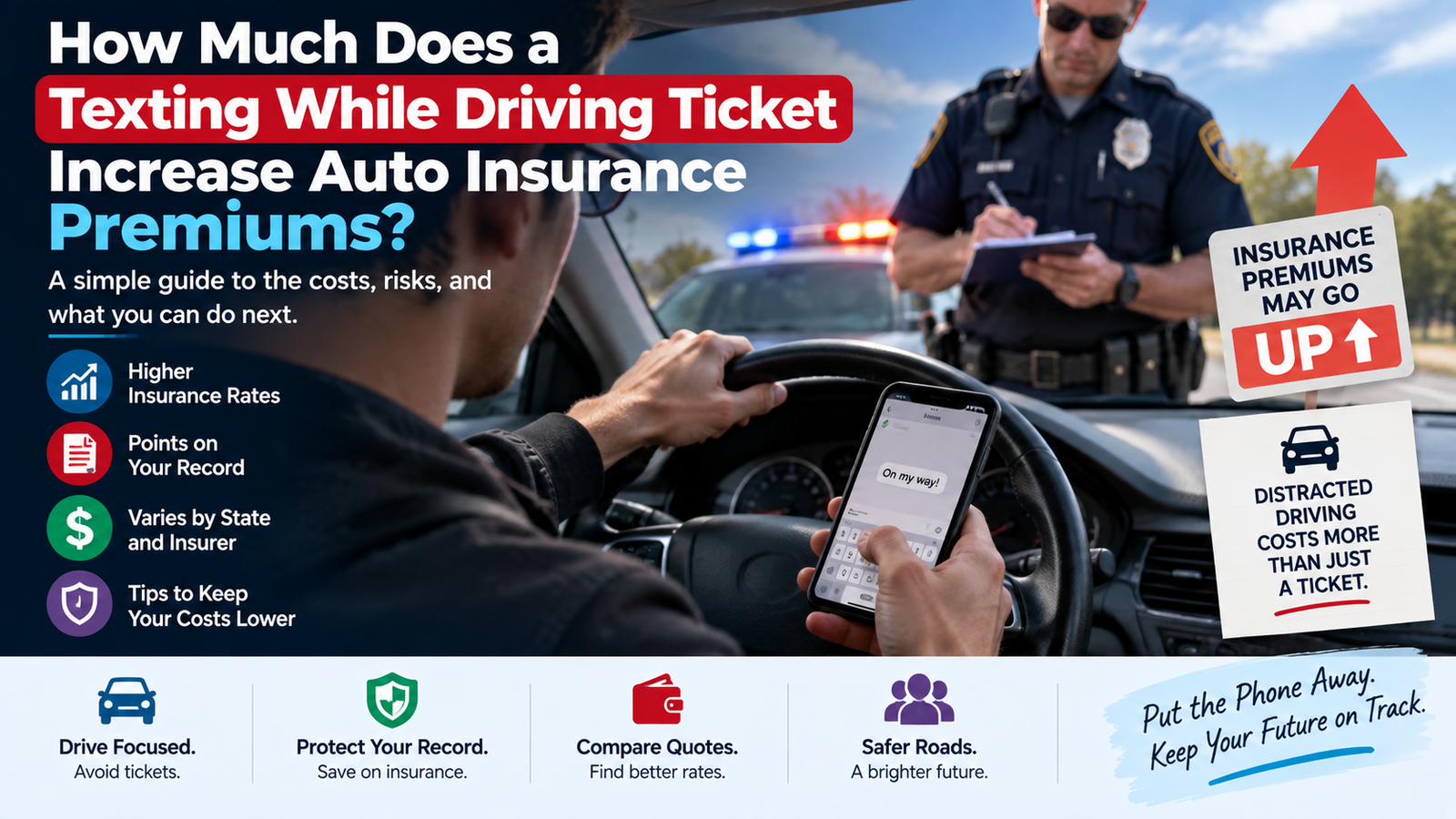
How Much Does a Texting While Driving Ticket Increase Auto Insurance Premiums?
Getting a ticket for texting while driving can cost more than the fine printed on the ticket.
For many drivers, the bigger expense can come later when the auto insurance policy renews.
So, how much does a texting while driving ticket increase auto insurance premiums?
There is no single percentage that applies to every driver.
Your insurance company, state, driving record, previous violations, age, coverage, and even the way the violation is classified can affect what happens to your premium.
Some drivers may see a relatively small change.
Others may see a much larger increase.
That is why it is better to think of a texting ticket as a new risk factor on your driving record rather than assuming your insurance will automatically rise by one fixed amount.
Why Can a Texting Ticket Increase Car Insurance?
Insurance companies use driving history to help estimate risk.
A driver with a clean record generally presents a different insurance profile from someone with recent traffic violations.
Texting while driving is especially important because it means the driver's attention was taken away from the road.
From an insurer's point of view, distracted driving can indicate a higher possibility of an accident.
That does not mean every insurer will respond in exactly the same way.
One company may treat the violation more seriously than another.
This is one reason drivers can receive very different insurance quotes after the same type of ticket.
Does Every Texting Ticket Increase Insurance?
Not necessarily in exactly the same way.
A texting or handheld-phone violation can be treated differently depending on where you live.
State laws vary.
The way a violation appears on your driving record may also vary.
Your insurer may consider:
- The exact violation
- Whether it appears on your motor vehicle record
- Your state
- Your previous driving history
- Other recent tickets
- Previous accidents
- Whether an accident was involved
- The insurer's own rating rules
A first violation for one driver may therefore have a different effect from the same violation for someone with several recent tickets.
Why Your State Matters
Texting-while-driving laws are not identical across the United States.
Different states can have different rules covering:
- Text messaging
- Handheld phone use
- Young drivers
- School zones
- Repeat violations
- Points on a driving record
- Fines and penalties
Insurance rules also vary by state.
This means two drivers receiving similar tickets in different states may not see the same insurance result.
If you recently received a ticket, check the rules that apply specifically in your state rather than relying only on a national average.
Why Your Insurance Company Matters
Two insurance companies can look at the same driver and calculate different premiums.
Imagine that you provide identical information to three insurers.
Company A may consider your texting ticket a significant rating factor.
Company B may still increase your price but by a smaller amount.
Company C may calculate your overall driver profile differently.
That is why your current insurer's renewal price is not automatically the price you would receive everywhere else.
If your premium increases noticeably, comparing companies may be worthwhile.
You can use the Best Car Insurance Companies Finder on our website as a starting point when comparing alternatives.
Does a Texting Ticket Affect Insurance Immediately?
Not always.
Your insurance company may not change your premium the day you receive the ticket.
The violation may become relevant when the insurer reviews your driving record, often around a renewal or another underwriting event.
For example, imagine you receive a texting ticket three months after renewing your policy.
Your monthly payment may remain unchanged for the rest of the current term.
The change could appear later when the next policy period begins.
However, insurance practices vary.
Do not assume your rate will stay the same simply because nothing changed immediately after the ticket.
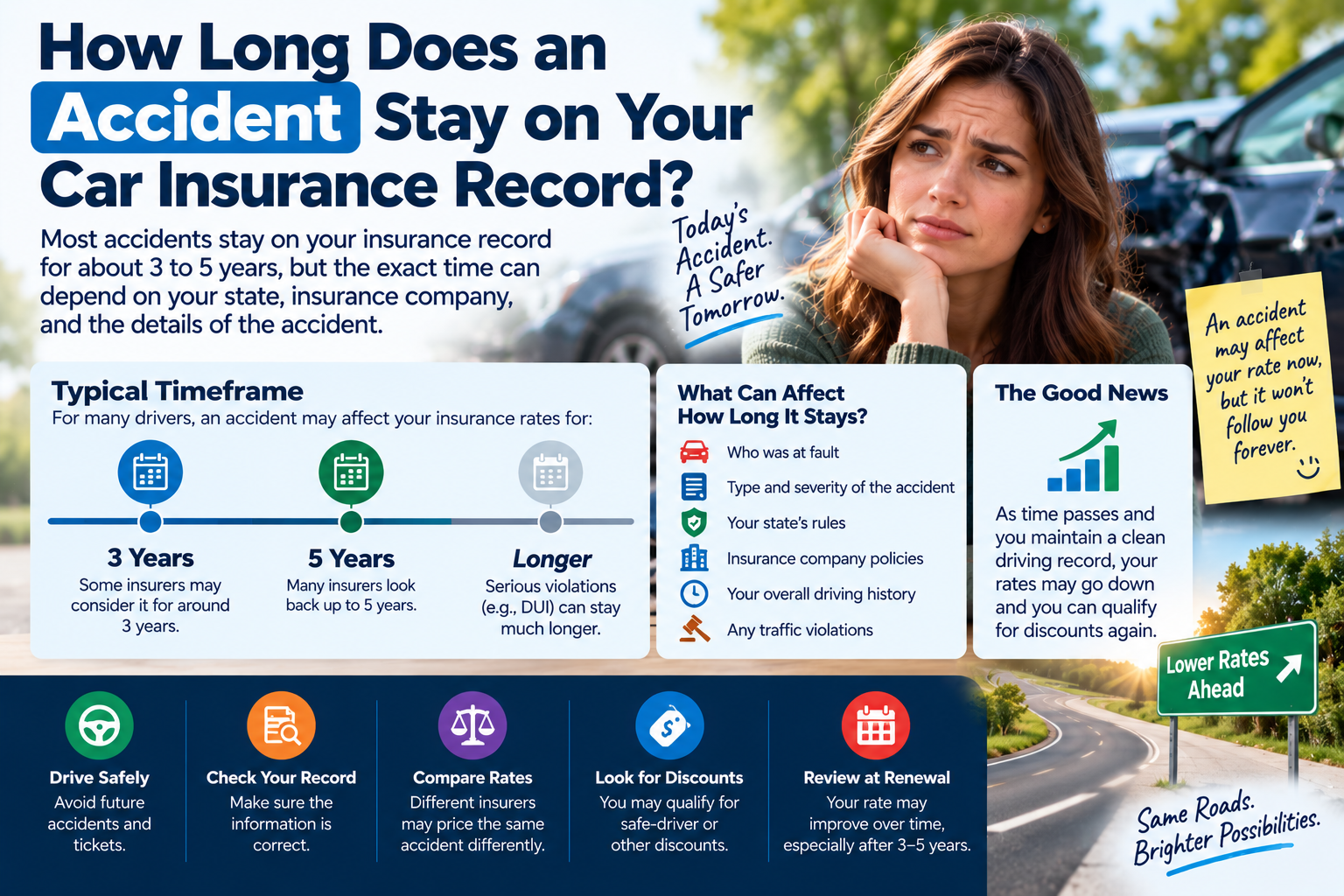
How Long Can a Texting Ticket Affect Your Insurance?
There is no universal time period that applies to every driver.
Traffic violations can remain relevant for several years depending on:
- State rules
- The type of violation
- Insurance company practices
- Your driving record
- Whether additional violations occur
Generally, the more time that passes without another incident, the less important an older violation may eventually become.
But you should not assume that a ticket disappears from insurance consideration after exactly one or two years.
Your insurer can tell you how it treats the specific violation.
What If It Is Your First Texting Ticket?
A first offense can still matter.
However, a driver with years of clean history may be evaluated differently from someone who already has multiple violations.
Imagine two drivers receive identical texting tickets.
Driver A has had a clean record for ten years.
Driver B already has a recent speeding ticket and an at-fault accident.
Their insurance outcomes may be very different.
Your complete driving history matters.
What If You Already Have Other Tickets?
Multiple violations can make the situation more serious.
One texting ticket alone is one thing.
A texting ticket combined with speeding, reckless driving, or several previous violations can create a different risk profile.
Insurers may pay attention to patterns.
A driver with several recent violations may be viewed as more likely to make a future claim than someone with one isolated incident.
This is another reason avoiding additional tickets after a violation is important.
Please Also Check This...
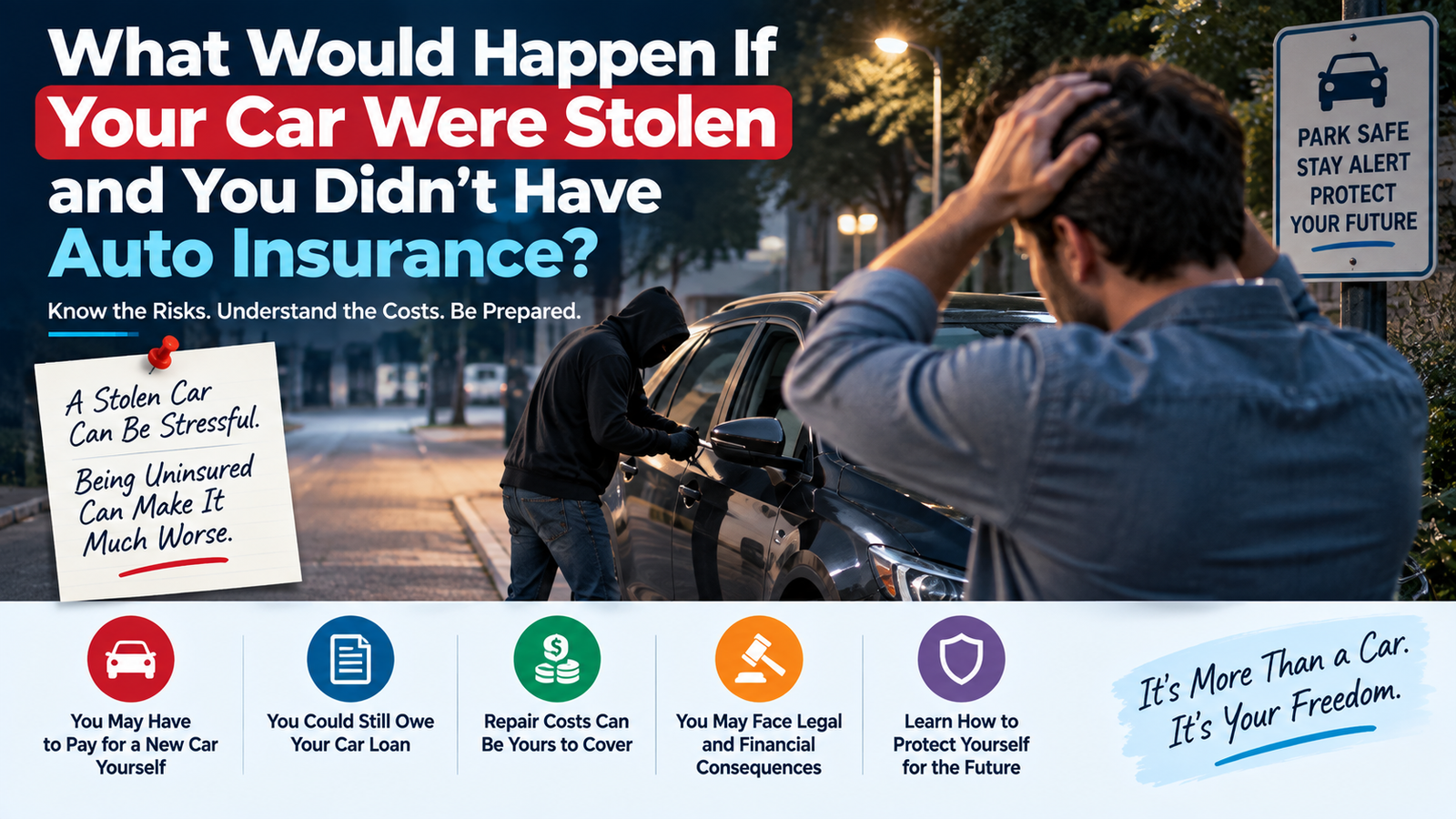
https://bestcarandautoinsurance.com/what-happens-if-your-car-is-stolen-without-auto-insurance
What If Texting Causes an Accident?
A texting ticket connected with an accident can create a much more complicated insurance situation.
Now there may be two separate issues:
The traffic violation.
And the accident.
If you caused the accident, the insurer may consider the claim, accident history, and violation when evaluating your future premium.
The financial impact can therefore be greater than a texting citation by itself.
If an accident causes injuries or significant property damage, legal and insurance issues can also become more serious.
Can a Texting Ticket Remove a Safe-Driver Discount?
Possibly.
Some drivers receive discounts because they meet an insurer's safe-driving requirements.
A new traffic violation may affect eligibility for certain discounts.
This creates an important point.
Your premium can increase in two ways.
First, the insurer may charge more because of the violation.
Second, you might lose a discount you previously received.
That can make the final increase feel larger than expected.
Ask your insurer which discounts changed when reviewing your renewal.
How to Calculate the Possible Increase Yourself
You can estimate the effect using a simple calculation.
Imagine your current premium is:
$200 per month.
Now imagine your insurer increases the premium by 25%.
Twenty-five percent of $200 is $50.
Your new estimated payment would be:
$250 per month.
That means an additional:
$50 each month.
Or:
$600 per year.
This is only an example, not a prediction of what your insurer will charge.
Use your actual renewal quote to calculate the real difference.
Monthly Cost Can Make the Increase Look Smaller
A monthly increase may not sound large until you calculate the annual amount.
Suppose your premium rises by $45 per month.
That becomes:
$540 per year.
If the higher rate continues for several policy periods, the total cost can become significant.
That is why the true financial cost of a driving violation can be much higher than the original traffic fine.
Can You Stop the Insurance Increase?
Usually, you cannot simply ask an insurer to ignore a valid violation.
But that does not mean you have no options.
There are several practical steps worth considering.
Compare Car Insurance Quotes
Different insurers price violations differently.
If your current premium rises sharply, compare quotes from other companies.
When comparing, use the same:
- Drivers
- Vehicles
- Coverage limits
- Deductibles
- Annual mileage
- Driving history
Do not hide the ticket.
Give every insurer accurate information.
A cheap quote based on incomplete information may change later when the company verifies your driving record.
You can also compare options using our Top 10 Cheapest Car Insurance Companies tool.
Ask About Other Discounts
Losing one discount does not necessarily mean you have lost every discount.
You may still qualify for savings related to:
- Multiple vehicles
- Home and auto bundling
- Automatic payments
- Paperless billing
- Vehicle safety features
- Low mileage
- Student status
- Other insurer-specific programs
Ask what discounts are actually available instead of assuming your current premium is the lowest possible price.
Consider a Defensive Driving Course
In some situations, an approved defensive-driving course may provide a benefit.
Whether it affects your ticket, driving record, points, or insurance depends on your state and insurer.
Do not pay for a course simply because a website promises that it will erase the ticket.
Check eligibility first.
Ask your insurer or the appropriate state authority whether the course would actually help in your situation.
Keep Your Driving Record Clean Going Forward
One of the most useful things you can do after receiving a traffic violation is avoid getting another one.
Do not treat one ticket as a reason to stop caring about your driving record.
A clean period after the violation can be much better than adding:
- Another texting ticket
- A speeding ticket
- A red-light violation
- An at-fault accident
- Reckless driving
Your future driving choices matter.
Put the Phone Away Before Driving
The easiest texting ticket to deal with is the one you never receive.
Before you start driving:
- Finish important messages
- Put the phone away
- Use Do Not Disturb While Driving if available
- Set navigation before moving
- Ask a passenger to handle messages
- Pull over safely if something is urgent
A message can wait.
An accident cannot always be undone.
Does Hands-Free Phone Use Affect Insurance?
This depends on the law and circumstances.
Hands-free use may be treated differently from physically holding or texting on a phone, but state laws vary.
Even where hands-free use is permitted, a driver still needs to pay attention to the road.
Always follow the law in the state where you are driving.
Is Texting While Driving Worse Than a Speeding Ticket for Insurance?
There is no universal answer.
Insurance companies can classify violations differently.
The seriousness of a speeding ticket can also vary greatly.
Driving five miles per hour over a limit is not necessarily treated the same as extremely high-speed driving.
Similarly, a texting violation connected to an accident can be more serious than a simple citation.
Compare the actual circumstances rather than assuming one violation always costs more than another.
Will Switching Insurance Companies Hide the Ticket?
No.
Changing insurance companies does not erase your driving history.
A new insurer may review your motor vehicle record when calculating a quote or underwriting your policy.
You should answer questions honestly.
The purpose of shopping around is not to hide the violation.
It is to find out whether another company prices your complete driver profile differently.
Should You Stay With Your Current Insurer?
Maybe.
Do not switch automatically just because your rate increased.
First compare the numbers.
Your existing insurer may still offer a competitive price even after the ticket.
Another company might advertise a lower starting price but charge more after considering the same violation.
Compare actual quotes with similar coverage.
Then decide.
Do Not Reduce Important Coverage Only Because of the Ticket
A premium increase can make drivers look for ways to save money.
That is understandable.
But be careful about reducing important coverage just to bring the monthly bill back down.
For example, lowering liability limits or removing physical-damage coverage can reduce your premium but also increase your financial exposure after an accident.
Before changing coverage, understand what you are giving up.
If you are not sure what your policy protects, read What Does Auto Insurance Cover?
Why Insurance Rates Differ So Much After the Same Ticket
This is one of the most important things to understand.
Two people can receive the same texting ticket and still see different insurance increases.
Driver A may be:
- 45 years old
- Accident-free
- Driving a standard family car
- Insured for many years
- Living in one state
Driver B may be:
- 21 years old
- Recently involved in an accident
- Driving a different vehicle
- Carrying different coverage
- Living in another state
Their insurance situations are not the same.
This is why a national average is useful for context but should never be treated as your personal quote.
Frequently Asked Questions
How much does a texting while driving ticket increase auto insurance premiums?
There is no fixed increase for every driver. Your insurer, state, driving history, existing violations, coverage, and other rating factors can all affect the change.
Will one texting ticket make my insurance go up?
It can, but the result depends on how your state and insurer treat the violation and your overall driving record.
When will my insurance increase after a texting ticket?
The increase may appear at a future policy renewal or when the insurer reviews your driving record rather than immediately after the ticket.
How long will a texting ticket affect car insurance?
It can remain relevant for several years, but the exact period varies by state, insurer, and violation.
Does a first texting ticket affect insurance?
It may. A first violation can still affect your rate, although your previous clean driving history may also be part of the insurer's evaluation.
Will a texting ticket affect a safe-driver discount?
It can affect eligibility for certain safe-driving discounts depending on the insurer's rules.
Can I switch insurance companies after getting a texting ticket?
Yes. You can compare other insurers, but the new company may also see the violation when reviewing your driving record.
Can a defensive driving course lower my insurance after a texting ticket?
Possibly, but it depends on your state, insurer, and course eligibility. Verify the benefit before enrolling.
Is texting while driving considered distracted driving?
Yes. Texting takes attention away from driving and is commonly treated as a form of distracted driving.
What happens if I receive another ticket?
Multiple recent violations can create a different risk profile and may cause a larger insurance impact than a single isolated ticket.
How Much Does a Texting While Driving Ticket Increase Auto Insurance Premiums? The Bottom Line
A texting while driving ticket can increase your auto insurance premium, but there is no single percentage that applies to everyone.
Your state matters.
Your insurance company matters.
Your previous driving record matters.
The type of violation matters.
And whether the ticket was connected with an accident can matter too.
If you recently received a texting ticket, do not panic and do not immediately reduce important coverage.
Wait for or request your actual renewal information.
Compare the new price with your previous premium.
Ask which discounts changed.
Then compare several insurers using the same coverage and accurate driving information.
Most importantly, avoid another distracted-driving violation.
The extra insurance cost matters, but preventing an accident matters much more.
For additional help, use our Best Car Insurance Companies Finder and explore our Insurance Calculators to compare your options after a change in your driving record.