What Happens If Your Car Insurance Lapses?
What happens if your car insurance lapses? Learn how a coverage gap can affect driving, registration, future premiums, financed vehicles, and what to do if your policy has already expired.
What Happens If Your Car Insurance Lapses?
You open an email from your insurance company and notice something you did not expect.
Your car insurance policy has ended.
Maybe a payment failed.
Maybe you forgot the renewal date.
Maybe your debit card expired.
Or perhaps you intentionally canceled your old policy but your new insurance did not start when you thought it would.
Now there is a gap between the old policy and the new one.
That gap is called a car insurance lapse.
A lapse can last one day, several weeks, or much longer.
Even a short lapse deserves attention because during that period you may have no active auto insurance protection.
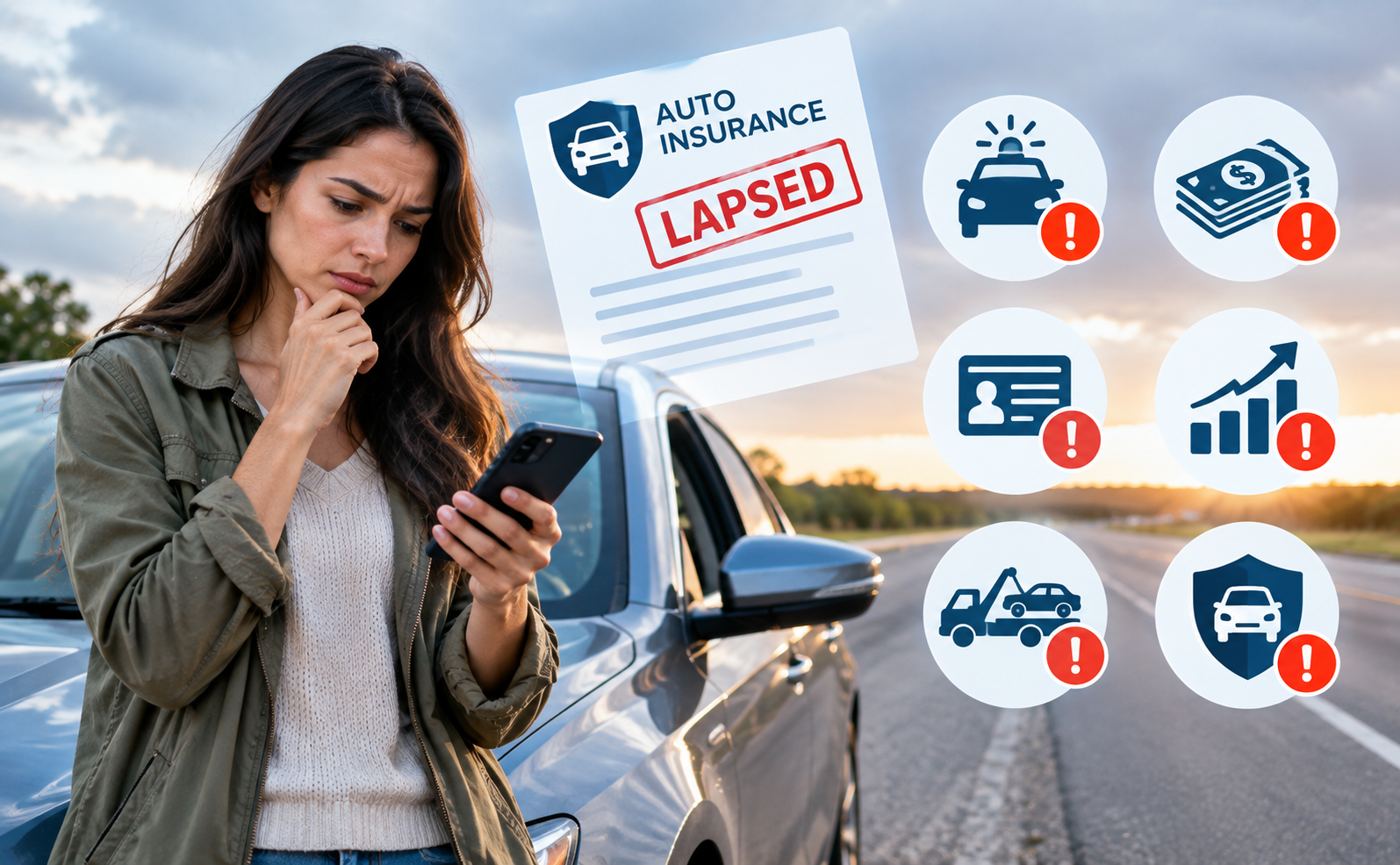
Depending on where you live and your situation, a lapse can also lead to higher future premiums, state penalties, registration problems, lender issues, or serious financial consequences if you drive and have an accident.
The most important thing is to act quickly.
If your insurance has already lapsed, do not assume everything will fix itself at the next renewal.
What Does a Car Insurance Lapse Mean?
A car insurance lapse means there is a period when your required insurance coverage is not active.
For example:
Your old policy ends on September 10.
Your new policy begins on September 15.
You have a five-day coverage gap.
That is a lapse.
A lapse can also happen when an insurer cancels your policy for nonpayment and you do not restore coverage before the cancellation becomes effective.
The length of the gap matters, but there is no universal rule saying that a one-day lapse is always harmless.
State requirements and insurance-company practices differ.
The safest approach is to avoid any gap whenever possible.
Why Does Car Insurance Lapse?
Insurance does not always lapse because someone intentionally decided to drive uninsured.
Many gaps happen because of simple mistakes.
Common reasons include:
- Missing a payment
- Expired credit or debit card
- Insufficient funds
- Forgetting the renewal date
- Canceling an old policy too early
- Starting a replacement policy too late
- Incorrect payment information
- Moving and missing an insurance notice
- Insurer cancellation
- Policy nonrenewal
- Failing to provide requested documents
- Selling a vehicle without properly handling the policy
- Misunderstanding automatic renewal
A small administrative mistake can therefore become an insurance problem surprisingly quickly.
What Happens If You Miss a Car Insurance Payment?
Missing one payment does not always mean your policy ends immediately.
Some policies or state rules provide a short period in which a late payment can be made before coverage terminates.
People commonly call this a grace period.
But you should never assume you automatically have one.
The length and rules can vary by insurer, policy, and state.
If you miss a payment, contact your insurance company immediately.
Ask:
Is my policy still active?
What is the final date I can pay?
Has a cancellation notice already been issued?
Will there be any gap in coverage?
Getting the exact answer from the insurer is much safer than assuming you still have several days.
Is There Always a Grace Period for Car Insurance?
No universal grace period applies to every policy.
Some drivers may have time to make a late payment without losing continuous coverage.
Other situations may work differently.
Your insurer may also have different rules depending on whether the issue involves:
- A missed installment
- A renewal payment
- A newly purchased policy
- Returned payment
- Policy cancellation
The important point is simple:
Do not drive based on an assumed grace period.
Confirm that the policy is actually active.
Can You Drive During an Insurance Lapse?
If your vehicle is required to have insurance and that insurance has ended, driving it can expose you to serious legal and financial risk.
Exact penalties vary by state.
Possible consequences can include:
- Fines
- Registration problems
- License suspension
- Vehicle impoundment
- Reinstatement fees
- Other state penalties
But the biggest financial risk may not be the ticket.
It may be causing an accident while uninsured.
What Happens If You Cause an Accident During a Lapse?
This can become extremely expensive.
Imagine your insurance ends on Monday.
You plan to purchase another policy on Friday.
On Wednesday, you cause an accident.
Because the accident occurred during the uninsured period, your old insurer generally is not there to provide coverage for a loss that happened after that policy ended.
A policy purchased after the accident generally will not go backward and cover a loss that already occurred.
You may personally face costs involving:
- Damage to another vehicle
- Injuries to other people
- Damage to property
- Your own vehicle
- Legal expenses
- Other accident-related losses
A serious accident can involve tens of thousands of dollars or much more.
This is why even a short lapse can create a large financial risk.
What Happens to Your Own Car During a Lapse?
Your own vehicle may also have no protection during the gap.
Suppose your comprehensive and collision coverage ended when your policy lapsed.
During the uninsured period:
Your car is stolen.
Or hail damages it.
Or a tree falls on it.
Or you crash into another vehicle.
If there was no active applicable coverage when the loss occurred, you may need to handle the damage yourself.
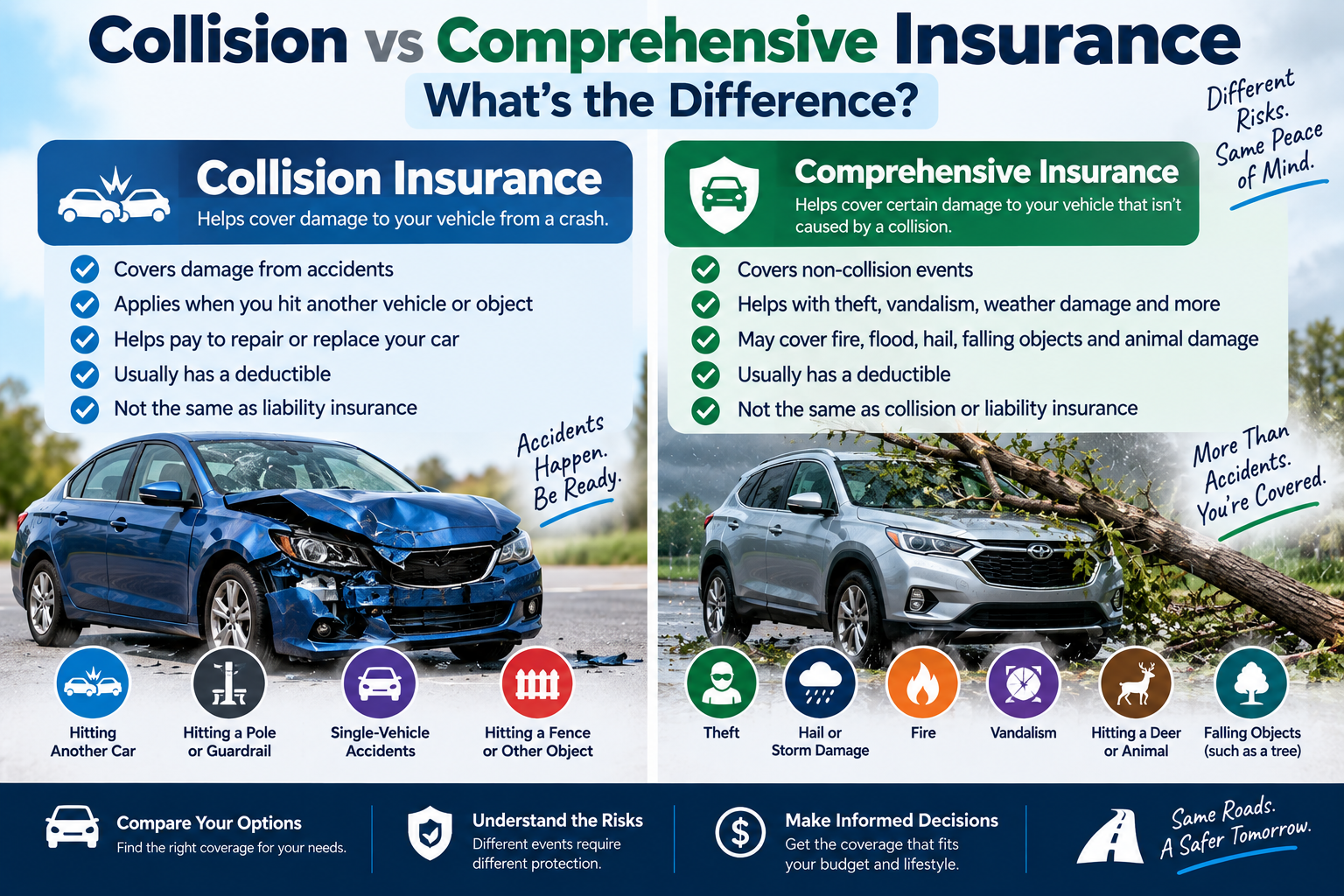
If you want to understand the different vehicle coverages, read Collision vs Comprehensive Insurance: What’s the Difference?
Can You Buy Insurance After an Accident and Have It Cover the Loss?
Normally, no.
Insurance is intended to cover eligible losses that occur while the policy is active.
Imagine:
Policy ends Monday.
Accident happens Wednesday.
New insurance begins Thursday.
The Thursday policy does not normally cover Wednesday's accident.
Trying to misrepresent when an accident occurred can also create serious insurance-fraud problems.
Always provide the correct date and circumstances.
Can a Car Insurance Lapse Increase Your Future Premium?
It can.
Insurance companies may consider whether you maintained continuous insurance when calculating a new premium.
A driver with a recent coverage gap may receive a different price from an otherwise similar driver who maintained continuous coverage.
The effect can depend on:
- Length of the lapse
- State
- Insurer
- Driving history
- Reason for the gap
- Previous insurance
- Vehicle
- Coverage selected
There is no honest fixed percentage that applies to every driver.
One company may treat the lapse differently from another.
This is one reason comparing insurers after a lapse can be useful.
Why Would an Insurance Company Care About a Coverage Gap?
From an insurer's perspective, previous insurance history can be one part of a driver's overall profile where permitted.
Continuous insurance can show that a driver regularly maintained coverage.
A gap may cause the new insurer to evaluate the application differently.
This does not mean a driver with a lapse cannot get insurance.
It simply means the policy could cost more or require different underwriting.
Does a One-Day Insurance Lapse Matter?
Potentially.
Do not assume a one-day gap is automatically ignored.
The practical effect can depend on:
- Your state
- Whether the vehicle remained registered
- Whether you drove it
- Your insurer
- How quickly coverage was restored
If your old policy ended yesterday and you discover the problem today, contact the insurer immediately.
Sometimes quick action can make a large difference.
What About a One-Week Lapse?
A week without insurance can create more exposure.
During those seven days, you may have:
- No liability coverage
- No collision coverage
- No comprehensive coverage
- No uninsured motorist protection
- No other protections that existed under the expired policy
You may also have state or lender obligations to consider.
Do not continue driving while hoping to solve the problem later.
Restore valid coverage first.
What About a Long Insurance Lapse?
A longer lapse can make obtaining replacement coverage more difficult or more expensive.
For example, someone who has been uninsured for many months may not receive the same pricing as a driver with continuous coverage.
The driver may also have other problems to resolve if the vehicle remained registered despite state insurance requirements.
If you have been uninsured for a long time, be completely honest when applying for a new policy.
A new insurer may ask:
Who previously insured you?
When did that policy end?
Why was there a gap?
Was the vehicle driven during the gap?
Accurate information is important.
Can Your Registration Be Suspended After an Insurance Lapse?
Depending on the state, yes.
States have different systems for monitoring required auto liability insurance.
Some states receive insurance-status information electronically from insurers.
If required coverage ends while a vehicle remains registered, the state may take action.
Possible consequences can include:
- Registration suspension
- Plate-related requirements
- Fees
- Proof-of-insurance requirements
- Driver-license consequences in some situations
Because the rules vary substantially, check your own state's motor vehicle or insurance authority if your policy has lapsed.
Can Your Driver's License Be Suspended?
In some states and circumstances, an insurance lapse or driving without required coverage can lead to driver's-license consequences.
This is not identical everywhere.
Do not rely on another driver's experience in a different state.
One state may impose a particular fee.
Another may suspend registration.
Another may impose different penalties depending on how long the lapse lasted.
Your own location determines the applicable rules.
What Happens If Your Car Is Financed?
A lapse can create an additional problem when the vehicle has a loan.
Auto lenders commonly require borrowers to maintain insurance protecting the financed vehicle.
That usually includes physical-damage protection such as collision and comprehensive coverage.
Why?
Because the vehicle is collateral for the loan.
If your insurance lapses, you may violate the terms of your loan agreement.
The lender may then take steps permitted under the contract.
What Is Force-Placed Insurance?
If a financed vehicle is not properly insured, the loan agreement may allow the lender to purchase insurance protecting its financial interest in the car.
This is sometimes called:
force-placed insurance
or
lender-placed insurance.
This type of coverage can be expensive.
More importantly, it is designed mainly to protect the lender's interest in the vehicle.
It should not be assumed to provide all the protection of a normal personal auto policy.
For example, it may not give you the same liability protection you would normally purchase for yourself.
If your lender tells you insurance has been force-placed, act quickly.
Get appropriate personal auto insurance and provide proof to the lender as required.
Does Force-Placed Insurance Replace Normal Car Insurance?
You should not assume it does.
Lender-placed coverage exists primarily because the lender wants its collateral protected.
Your normal personal auto policy can include important protection such as:
- Liability
- Collision
- Comprehensive
- Uninsured motorist coverage
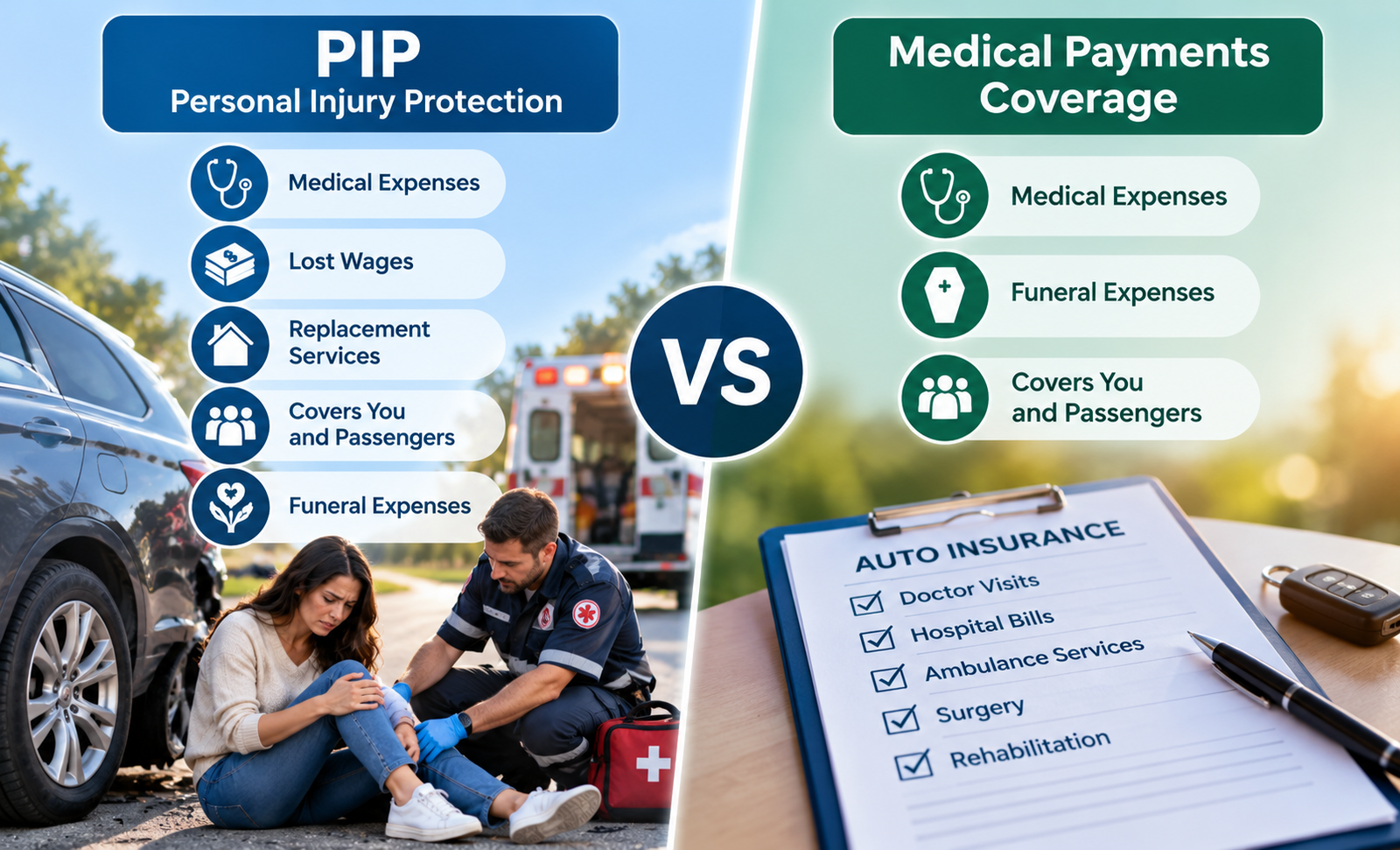
- Medical-related coverage
- Other optional protections
A lender's policy may not replace these in the way you expect.
If you receive notice of force-placed insurance, read it carefully and contact both your lender and an insurance company.
What Happens If Your Leased Car Insurance Lapses?
A leased vehicle can create similar problems.
Lease contracts usually require specific insurance coverage.
If coverage lapses, you may violate the lease agreement.
The leasing company may require you to restore insurance immediately and could take other steps allowed under the contract.
Do not assume that because you do not technically own the vehicle, insurance becomes someone else's responsibility.
As the lessee, maintaining required coverage is usually part of your agreement.
Can a Lapse Affect Your Insurance Discounts?
Possibly.
Some insurers offer discounts related to:
- Continuous insurance
- Loyalty
- Claim-free history
- Safe driving
- Bundling
A lapse may affect eligibility for certain discounts or programs.
This means the cost after a lapse can sometimes rise for more than one reason.
You might receive a different base rate.
And:
You might lose a discount you previously had.
Ask the insurer exactly what changed.
Can You Reinstate a Lapsed Car Insurance Policy?
Sometimes.
Your insurer may allow you to reinstate the previous policy after cancellation, depending on:
- How long the policy has been inactive
- Reason for cancellation
- Payment status
- Insurer rules
- State requirements
Reinstatement does not always mean the same thing.
Reinstatement Without a Lapse
In some situations, the insurer may accept payment in a way that preserves continuous coverage.
Reinstatement With a Lapse
In another situation, the insurer may restart the policy but leave the uninsured period in place.
That difference is extremely important.
Ask:
“Will reinstatement remove the coverage gap, or will my record still show a lapse?”
Do not assume reinstating the policy automatically means the gap disappeared.
What Should You Do Immediately If Your Insurance Lapses?
Act quickly and keep the process simple.
Stop Driving Until Coverage Is Confirmed
Do not continue using the vehicle if required insurance is not active.
Contact Your Current Insurer
Ask whether reinstatement is possible.
Ask About the Exact Cancellation Date
You need to know when coverage stopped.
Ask Whether Reinstatement Will Be Continuous
Find out whether the insurer can restore coverage without a gap.
Get Replacement Quotes If Necessary
If the old insurer will not reinstate the policy, start another policy as quickly as possible.
Check State Requirements
Make sure there are no registration, plate, or other requirements created by the lapse.
Contact Your Lender
If the car is financed or leased, make sure the required proof of insurance is provided.
Should You Get Several Quotes After a Lapse?
Yes, it can be useful.
Different insurance companies can price a driver with a lapse differently.
One insurer may quote:
$165 per month.
Another:
$210.
Another:
$270.
These are only examples, but they show why comparison matters.
When requesting quotes, provide the correct insurance history.
Do not say you had continuous coverage if you did not.
You can compare companies using our Best Car Insurance Companies Finder.
Does Getting Insurance Quotes Hurt Your Credit?
Generally, requesting normal auto insurance quotes is not the same as applying for a loan.
Insurance-related credit checks are typically soft inquiries where credit information is used.
For a complete explanation, read Does Getting Auto Insurance Quotes Affect Credit Score?
This means concern about credit-score damage should generally not stop you from comparing several insurance companies after a lapse.
Should You Choose the Cheapest Policy After a Lapse?
Not automatically.
You may be anxious to restore coverage quickly.
That can make the lowest price look attractive.
But compare what each policy actually includes.
Check:
- Liability limits
- Collision
- Comprehensive
- Uninsured motorist coverage
- Deductibles
- Optional benefits
A $120 policy with much less protection is not necessarily better than a $150 policy with coverage that better fits your needs.
If you need help understanding coverage, read What Does Auto Insurance Cover?
Can You Remove Collision and Comprehensive to Make Insurance Cheaper?
Possibly, if your situation allows it.
But think carefully.
If the vehicle is financed or leased, collision and comprehensive may be required.
Even if the vehicle is fully owned, removing these coverages means accepting more financial risk yourself.
If the car is stolen, flooded, damaged by hail, or involved in a collision, you may have less protection for your own vehicle.
Read Collision vs Comprehensive Insurance: What’s the Difference? before removing them.
How Can You Prevent Another Car Insurance Lapse?
Preventing the next lapse is much easier than fixing one.
Use Automatic Payments
Automatic payments can reduce the chance of simply forgetting a bill.
Keep Your Payment Method Updated
If your card expires, update it before the next payment.
Turn On Email and Text Alerts
Do not ignore messages from your insurance company.
Review Your Renewal Date
Add it to your calendar.
Maintain a Small Insurance Buffer
If possible, keep enough money available to handle an unexpected premium payment.
Contact the Insurer Early
If you know you cannot make a payment, call before the due date.
There may be options available that are much better than silently allowing the policy to cancel.
What If You Cannot Afford Your Car Insurance?
Do not simply stop paying without exploring alternatives.
Call the insurer and ask about:
- Different payment plans
- Available discounts
- Deductible changes
- Coverage adjustments
- Mileage programs
- Bundling
- Other policy options
Then compare other insurers.
However, be careful about cutting important coverage purely to reach a lower monthly price.
A cheaper policy can create much larger financial exposure after an accident.
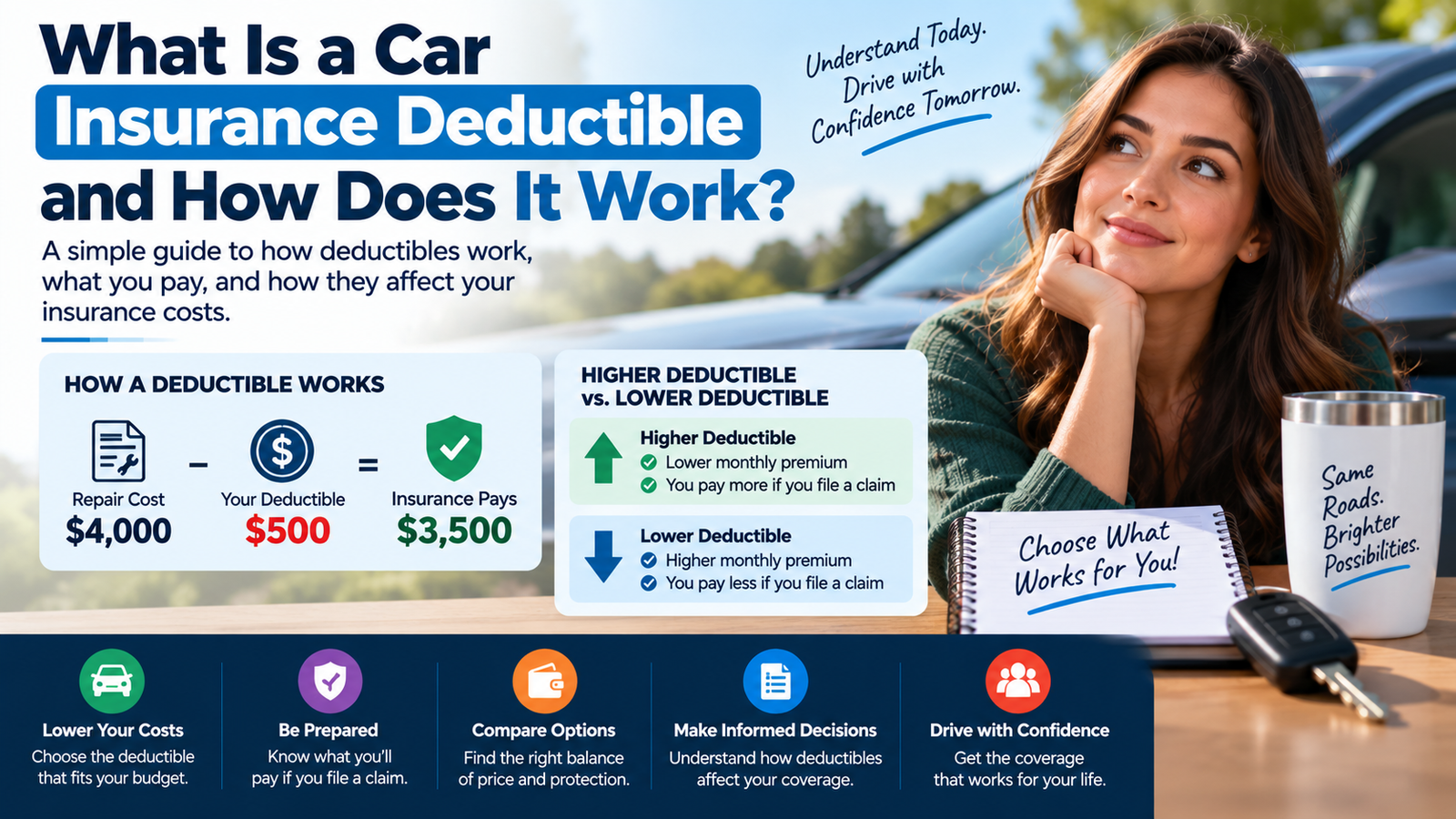
Can Raising Your Deductible Reduce Your Premium?
It can sometimes lower the cost of collision or comprehensive coverage.
For example, you might compare:
$500 deductible
with:
$1,000 deductible.
The higher deductible may produce a lower premium.
But remember what you are accepting.
If you have a covered claim, you may need to pay more yourself.
Only choose a deductible you can realistically afford.
Read What Is a Car Insurance Deductible and How Does It Work? for a detailed explanation.
Should You Cancel Insurance If You Are Not Driving the Car?
Do not automatically cancel everything.
If the vehicle is registered, state requirements may still apply.
If it is financed or leased, the lender may still require physical-damage coverage.
Even a car sitting in a garage can experience:
- Theft
- Fire
- Flood
- Vandalism
- Falling objects
If you will not drive the vehicle for an extended period, contact your insurer and state motor vehicle authority to ask about your available options.
There may be better solutions than creating an unintended lapse.
What If You Sell Your Car?
Selling your vehicle is different from simply allowing insurance to lapse.
Coordinate the timing carefully.
Make sure the sale, registration, plates, and insurance are handled in the correct order for your state.
Do not cancel coverage days before ownership or registration has actually changed if that creates an uninsured period.
What If You Buy Another Car Later?
A previous insurance lapse may become relevant when you apply for new coverage.
Be honest about when your previous policy ended.
If the lapse happened because you did not own a vehicle for a period, explain that accurately.
That situation may be viewed differently from owning and driving a registered vehicle without required insurance.
The insurer can tell you what documentation it needs.
Can You Be Denied Insurance Because of a Lapse?
A lapse does not automatically mean no company will insure you.
However, it may affect which insurers are available or how much they charge.
Some drivers may need to compare more companies after a long gap.
If one quote is expensive, do not assume every insurer will offer the same price.
Different companies evaluate risk differently.
How Long Does a Lapse Affect Your Auto Insurance?
There is no universal timeline.
The effect depends on:
- Insurer
- State
- Length of gap
- Overall driving history
- Previous coverage
- How much time has passed
As you maintain continuous insurance again, your options may improve over time.
Rather than waiting for one specific anniversary, compare insurance periodically.
Does an Insurance Lapse Stay on Your Driving Record?
A coverage lapse and a traffic violation are not exactly the same thing.
However, insurers and states may maintain information about insurance status through different systems.
If a lapse leads to:
- Registration suspension
- License action
- Driving-without-insurance citation
those consequences may create additional records.
This is another reason to restore coverage before driving.
What If the Lapse Was the Insurance Company's Mistake?
Contact the company immediately.
Keep:
- Payment confirmations
- Emails
- Bank statements
- Policy documents
- Cancellation notices
- Any previous communication
If you believe coverage was canceled incorrectly, ask the insurer to review the records.
Do not continue driving while the dispute is unresolved unless the company confirms that coverage is active.
The priority is making sure valid insurance exists now.
What If Your Auto-Pay Failed?
This is a surprisingly common problem.
Maybe your card expired.
Maybe the bank rejected the transaction.
Maybe you changed accounts.
Do not assume auto-pay means you never need to check the policy again.
Review insurance notices and payment confirmations.
If an automatic payment fails, contact the insurer immediately and find out whether the policy is still active.
Can a Lapse Affect a Future Insurance Claim?
A future covered loss that occurs after valid insurance is restored can be handled according to the new policy.
The important date is when the loss occurred.
For example:
Policy lapses: June 1–June 5
New policy begins: June 6
Accident occurs: June 10
The June 10 accident occurred after the new policy began.
Now change the example:
Accident occurs: June 4
That accident happened during the lapse.
The difference of only a few days can completely change the insurance situation.
Frequently Asked Questions
What happens if your car insurance lapses?
You may have no active auto insurance protection during the gap. Depending on your state and circumstances, you may also face higher future premiums, registration or license consequences, and lender-related problems.
Is a one-day car insurance lapse bad?
Even a short lapse can matter. Contact the insurer immediately and find out whether coverage can be reinstated without a gap.
Can I drive if my car insurance lapsed?
You should not drive a vehicle that lacks insurance required by your state. Restore valid coverage first.
Will a lapse increase my car insurance premium?
It can. Some insurers consider continuous insurance when pricing policies, so a coverage gap may lead to a higher quote.
Can I reinstate car insurance after it lapses?
Possibly. Contact the previous insurer immediately. Reinstatement rules vary, and the insurer may or may not be able to restore continuous coverage.
Does a grace period prevent an insurance lapse?
It can if your policy provides one and you satisfy its requirements before coverage terminates. Do not assume every policy has the same grace period.
What happens to a financed car if insurance lapses?
The lapse may violate your loan agreement. Your lender may require immediate proof of insurance and may have the right to obtain lender-placed coverage under the contract.
Does lender-placed insurance protect me?
It is generally designed primarily to protect the lender's financial interest. Do not assume it replaces the liability and other protections in your personal auto policy.
Can I buy insurance after an accident and cover the accident?
Generally, no. A policy normally does not cover a loss that occurred before its effective date.
How can I avoid another insurance lapse?
Use payment reminders, maintain updated payment information, watch renewal notices, use automatic payments when appropriate, and contact your insurer before a payment problem turns into cancellation.
What Happens If Your Car Insurance Lapses? The Bottom Line
A car insurance lapse may look like a small administrative problem.
But it can become much more serious if you continue driving.
During the gap, you may have no insurance protection.
If you cause an accident, you could be personally responsible for major expenses.
Your state may also impose penalties.
Your next insurance policy may cost more.
And if your vehicle is financed or leased, the lapse can create problems with your lender or leasing company.
If you discover that your policy has lapsed:
Stop driving until valid coverage is confirmed.
Contact your insurer immediately.
Ask whether reinstatement is possible.
Find out whether the reinstatement removes the gap.
Get replacement quotes if necessary.
Check any state requirements.
And provide updated proof of insurance to your lender when required.
Most importantly, do not wait.
A lapse is usually easier to fix today than after an accident tomorrow.
For more information, read What Does Auto Insurance Cover?, What Is a Car Insurance Deductible and How Does It Work?, Does Getting Auto Insurance Quotes Affect Credit Score?, and Collision vs Comprehensive Insurance: What’s the Difference?