What Is Rental Reimbursement Coverage?
Learn what rental reimbursement coverage is, when it can help pay for a rental car after a covered accident, how daily and total limits work, and when this optional coverage may be useful.
What Is Rental Reimbursement Coverage?
Imagine your car is damaged in an accident.
The repair shop tells you:
“We need your vehicle for ten days.”
You still need to get to work.
You need groceries.
You may need to take your children to school.
And suddenly you have another expense:
A rental car.
This is where rental reimbursement coverage can help.
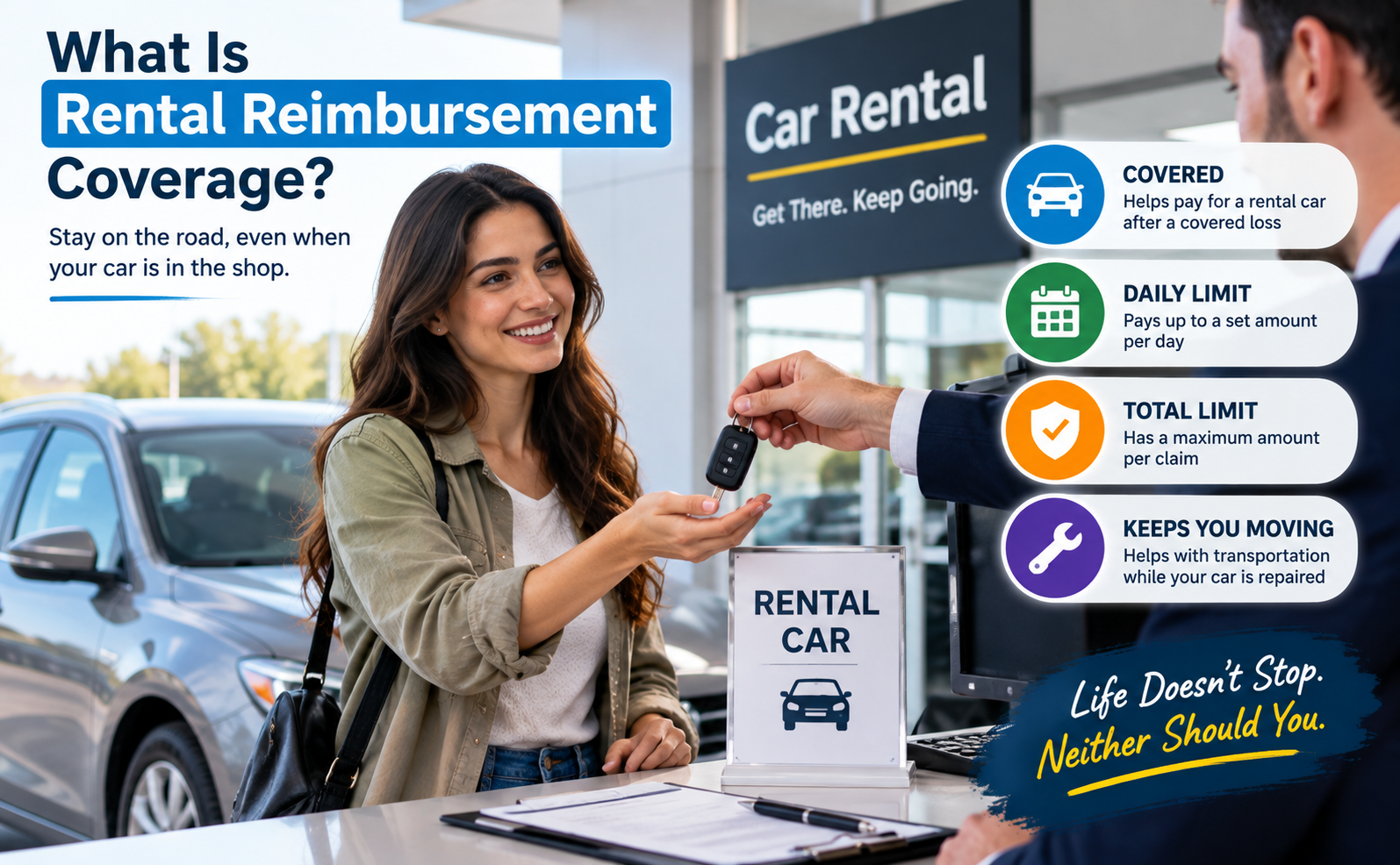
Rental reimbursement coverage is an optional part of auto insurance that may help pay for temporary transportation when your insured vehicle cannot be used because of a covered loss.
It is sometimes called:
Rental car reimbursement
or
transportation expense coverage.
The coverage normally has limits, and it does not pay for a rental car in every situation.
Understanding when it works can help you decide whether it is worth adding to your policy.
How Does Rental Reimbursement Coverage Work?
Rental reimbursement coverage generally becomes useful after a covered claim leaves your vehicle temporarily unavailable.
For example, imagine you have collision coverage.
You are involved in a covered accident.
Your car needs eight days of repairs.
Your policy includes rental reimbursement.
Your insurer may help pay for a rental vehicle during the repair period, subject to your policy's limits and conditions.
This does not mean the insurer will pay an unlimited rental bill.
Your policy may specify:
- Maximum amount per day
- Maximum total amount
- Maximum number of days
- Type of transportation allowed
Those limits are important.
Example of Rental Reimbursement Coverage
Suppose your policy provides:
$50 per day
with a maximum benefit of:
$1,500 per covered claim
Your car needs ten days of repairs.
The rental vehicle costs $45 per day.
Ten days × $45 = $450.
Because the daily cost is below your $50 limit and the total is below $1,500, the covered rental expense may fit within your policy limit.
Now imagine the rental costs:
$75 per day.
But your policy limit is:
$50 per day.
You may be responsible for the difference.
This is why the daily limit matters.
check below..
https://bestcarandautoinsurance.com/does-getting-auto-insurance-quotes-affect-credit-score
What Does 30/900 Rental Reimbursement Mean?
Some insurers may describe rental reimbursement using numbers such as:
30/900
Depending on the insurer, this might mean something similar to:
Up to $30 per day.
Up to $900 total per covered claim.
Do not assume every insurer formats the limit in exactly the same way.
Read the policy or ask what each number means.
When Does Rental Reimbursement Coverage Apply?
Rental reimbursement generally requires an underlying covered loss.
This is one of the most important things to understand.
You usually cannot simply rent a vehicle because your car is unavailable for any reason.
The reason your vehicle is unavailable needs to qualify under the applicable insurance coverage.
Examples may include a covered:
- Collision
- Theft
- Vandalism loss
- Weather-related loss
- Comprehensive claim
- Other insured vehicle damage
The exact circumstances depend on your policy.
Does Rental Reimbursement Cover an Accident?
It can.
Suppose you have collision coverage and your vehicle is damaged in a covered accident.
The repair shop needs the car for several days.
If you also purchased rental reimbursement coverage, it may help pay for temporary transportation while your vehicle is being repaired.
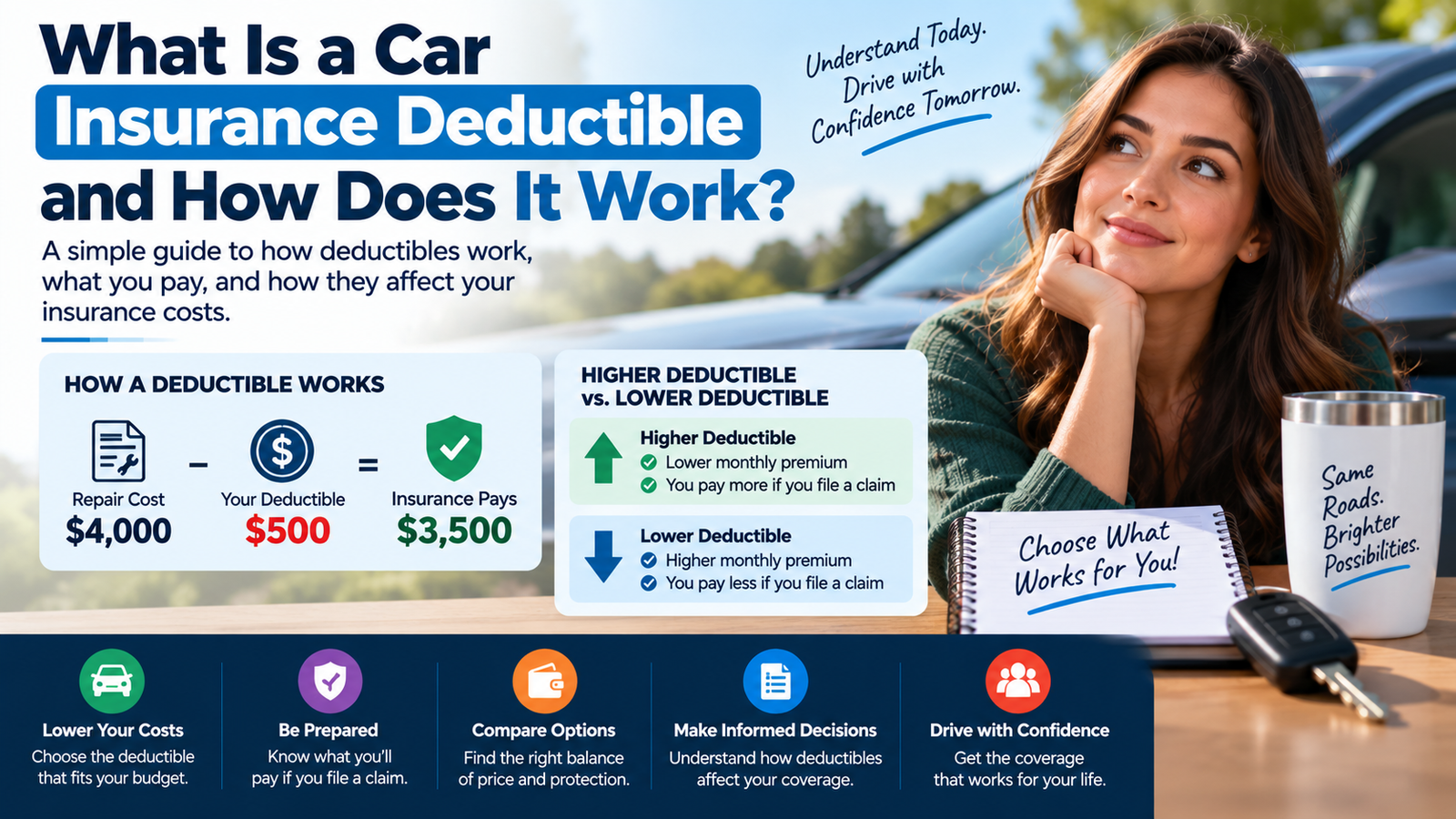
Your collision deductible may still apply to the vehicle-damage claim.
Rental reimbursement is a separate benefit.
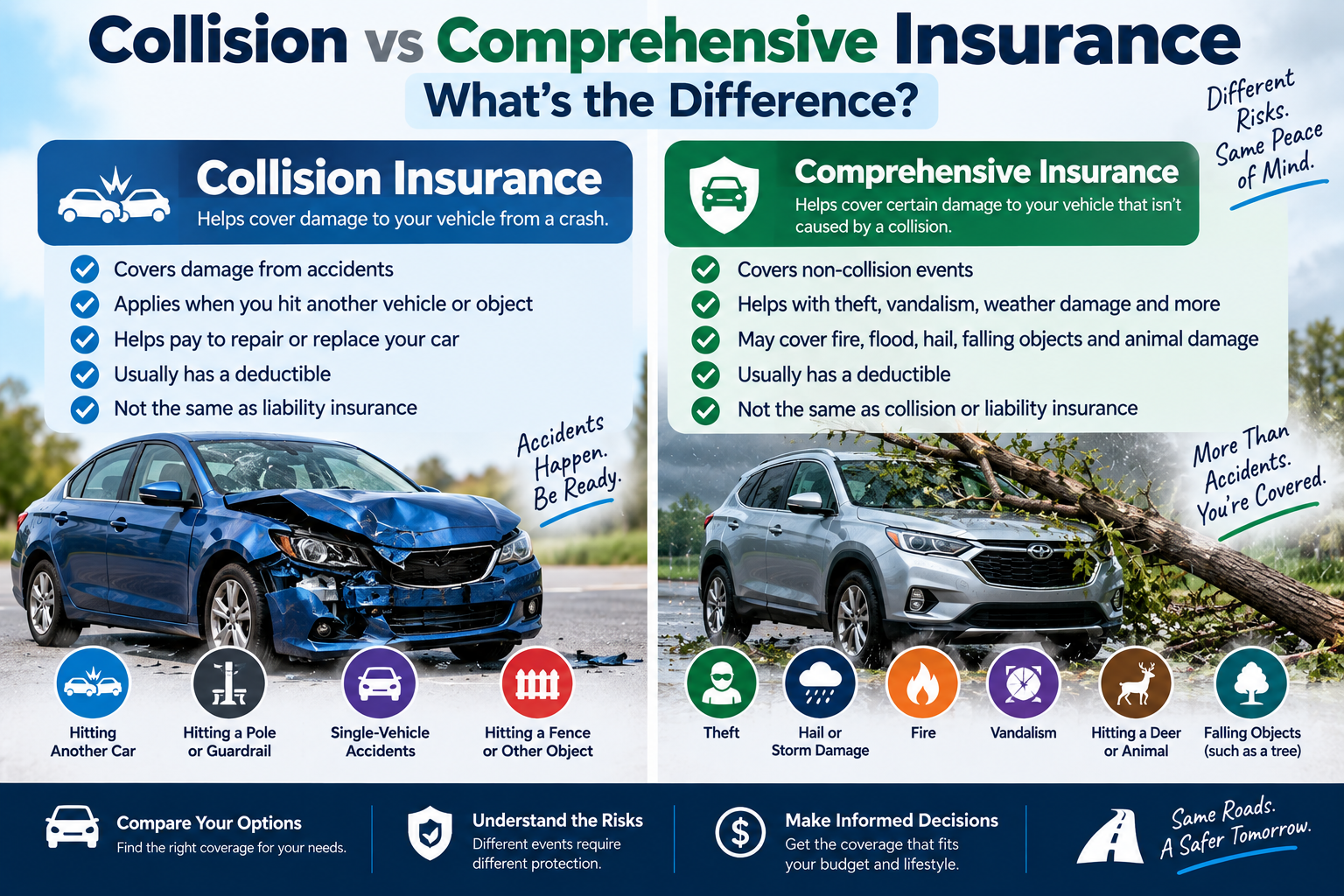
If you are unsure how collision coverage works, read Collision vs Comprehensive Insurance: What’s the Difference?
Does Rental Reimbursement Cover a Stolen Car?
It may if theft is a covered loss under your policy and you have comprehensive coverage plus rental reimbursement.
Imagine your vehicle is stolen.
You report the theft to the police and your insurer.
You now have no vehicle while the claim is being investigated.
Rental reimbursement may potentially help with temporary transportation according to the policy.
But the rental benefit will still have limits.
It does not necessarily continue forever while you wait for the vehicle to be recovered.
Does It Cover a Car Damaged by Flooding?
Potentially.
Flood damage is generally associated with comprehensive coverage.
If a covered flood makes your vehicle unusable and you also carry rental reimbursement, the transportation benefit may apply while the covered claim is being handled.
For more information, read Does Auto Insurance Cover Flood Damage to a Car?
Does Rental Reimbursement Cover Hail Damage?
It may.
Suppose a major hailstorm damages your vehicle badly enough that it needs several days at a body shop.
If the hail damage is covered under comprehensive insurance and your policy also includes rental reimbursement, the transportation benefit may become available.
Again, check your individual limits.
Does Rental Reimbursement Cover Windshield Replacement?
Usually, a simple windshield replacement does not keep your vehicle unavailable for very long.
You may not need a rental vehicle at all.
However, if a covered glass or comprehensive claim involves additional vehicle damage and the car needs to remain at a repair facility, rental coverage could potentially become relevant depending on the policy.
For more information about glass coverage, read Does Car Insurance Cover Windshield Replacement?
Does Rental Reimbursement Cover Mechanical Breakdown?
Generally, no.
Rental reimbursement is normally associated with a covered auto insurance loss.
Routine mechanical problems are different.
Suppose your transmission fails because of normal wear.
Your car spends a week at a mechanic.
That does not automatically make rental reimbursement available.
Likewise, ordinary problems such as:
- Dead battery
- Worn brakes
- Engine wear
- Transmission failure
- Routine maintenance
are generally not the type of insured losses that activate rental reimbursement.
Does Rental Reimbursement Cover Routine Maintenance?
No, generally not.
If your vehicle goes into a workshop for:
- Oil change
- Tire replacement
- Brake service
- Scheduled maintenance
- Inspection
Rental reimbursement normally does not pay for your transportation.
The vehicle must usually be unavailable because of an eligible covered loss.
Is Rental Reimbursement Included Automatically?
Not always.
In many auto policies, rental reimbursement is optional.
You may need to specifically add it.
A driver can have:
Liability coverage.
Collision coverage.
Comprehensive coverage.
And still have no rental reimbursement benefit.
Do not assume that because you have “full coverage,” you automatically have rental coverage.
Check your declarations page.
Is Rental Reimbursement Part of Full Coverage?
The phrase full coverage is not one standardized insurance product.
People commonly use it to mean:
- Liability
- Collision
- Comprehensive
Rental reimbursement is often an additional optional coverage.
So a driver may say:
“I have full coverage.”But discover after an accident that no rental vehicle benefit was included.
This is why actual policy details matter more than the phrase “full coverage.”
Do You Need Collision and Comprehensive Before Adding Rental Reimbursement?
Insurer rules vary.
Some companies may require collision and comprehensive coverage before rental reimbursement can be added.
That makes sense because rental reimbursement usually works alongside a covered physical-damage claim.
Ask your insurer what coverage is required before adding the option.
How Long Will Insurance Pay for a Rental Car?
Not indefinitely.
Your policy may limit rental reimbursement by:
- Daily dollar amount
- Total dollar amount
- Number of days
- Repair timeline
- Claim settlement
For example, a policy may provide a rental while your covered vehicle is being repaired.
But once repairs are completed, the rental benefit generally ends.
A total-loss claim may work differently.
What Happens When Your Car Is Totaled?
Suppose your vehicle is badly damaged and the insurer declares it a total loss.
Rental reimbursement may continue for a limited period while the claim is being evaluated or settled.
But the benefit generally does not continue indefinitely while you search for another car.
Your insurer may stop paying after:
- A settlement is offered
- A certain number of days passes
- Your policy limit is reached
- Another policy condition occurs
Ask your insurer exactly when rental benefits stop after a total loss.
What Happens If Repairs Take Longer Than Expected?
This can happen.
A repair shop may initially estimate seven days.
Then a replacement part is delayed.
Suddenly the repair takes three weeks.
Your rental reimbursement may continue if the longer repair time remains reasonable and connected to the covered claim—but only until your policy limits are reached.
Suppose your total rental limit is:
$1,200.
Once covered rental expenses reach $1,200, you may have to pay additional costs yourself even if the vehicle is still being repaired.
What If the Repair Shop Causes the Delay?
Contact your insurer.
The answer may depend on why the delay occurred.
A reasonable delay caused by unavailable parts can be different from unnecessary delay caused by the repair facility.
Insurance companies may review whether the continued rental expense is reasonably connected to the covered repair process.
Do not simply keep the rental for weeks without staying in contact with the insurer.
Does Rental Reimbursement Have a Deductible?
Rental reimbursement itself may not use the same traditional deductible as collision or comprehensive coverage.
But the underlying vehicle-damage claim may still have a deductible.
For example:
Collision repair: $6,000
Collision deductible: $500
Rental expense: $400
You may still owe your $500 collision deductible while the rental expense is handled separately under your rental reimbursement limit.
If deductibles are confusing, read What Is a Car Insurance Deductible and How Does It Work?
Does Rental Reimbursement Pay for Any Rental Car?
Not necessarily.
Your policy may have a daily dollar limit.
Suppose your policy pays:
Up to $40 per day.
You choose a luxury SUV costing:
$100 per day.
Your insurer may not pay the full $100.
You may need to cover the difference yourself.
Choosing a vehicle within your policy limit can help avoid unnecessary out-of-pocket costs.
Can You Upgrade the Rental Car?
Usually, you can choose to pay additional money yourself if you want a more expensive rental vehicle.
Suppose your insurance allowance is:
$50 per day.
A standard vehicle costs:
$45 per day.
A luxury vehicle costs:
$90 per day.
If you choose the luxury car, you may have to pay the amount above your covered allowance.
Confirm the arrangement before accepting the vehicle.
Does Rental Reimbursement Pay for Fuel?
Generally, no.
You would normally buy fuel for your own vehicle if it were available.
Rental reimbursement is typically designed to help with the rental charge itself, not ordinary operating expenses.
You should expect to pay for your own:
- Fuel
- Tolls
- Parking
- Traffic tickets
- Optional services
Unless your policy specifically says otherwise.
Does It Pay for a Rental Car Deposit?
Not necessarily.
Rental companies may require a deposit, authorization hold, or credit card.
That is usually part of the rental-company transaction rather than an insurance benefit.
Ask the rental company what is required before picking up the car.
Does It Pay for Rental Car Insurance?
Do not assume so.
When you rent a temporary vehicle, the rental company may offer additional protection such as a collision damage waiver or supplemental liability product.
Whether you need those options depends on your existing auto policy, credit-card benefits, rental agreement, and personal risk preferences.
Rental reimbursement usually helps with transportation costs.
It does not automatically mean every optional product sold by the rental company will be reimbursed.
Will Your Existing Auto Insurance Cover the Rental Vehicle?
Your existing auto policy may extend certain coverage to a temporary rental vehicle, but this depends on your policy and situation.
Before declining protection at the rental counter, ask your insurer:
Does my liability coverage transfer?
Does my collision coverage transfer?
Does comprehensive coverage transfer?
What deductible applies?
Are there exclusions for certain vehicle types?
Getting those answers beforehand can prevent confusion.
Can Rental Reimbursement Pay for Uber or Lyft?
Some modern policies or transportation-expense benefits may allow alternatives such as:
- Rideshare
- Taxi
- Public transportation instead of a traditional rental vehicle.
But this varies by insurer.
Do not assume rideshare expenses are covered simply because you have rental reimbursement.
Ask whether your policy covers transportation expenses more broadly.
Can It Pay for Public Transportation?
Possibly, if your policy includes broader transportation-expense benefits.
Some insurers may allow reimbursement for alternative transportation while your vehicle is unavailable after a covered loss.
Others may specifically focus on rental vehicles.
Check before paying for transportation if reimbursement is important to you.
What If You Do Not Need a Rental Car?
You do not have to use rental reimbursement simply because you purchased it.
Suppose your spouse has another car.
Or you work from home.
Or you can use public transportation.
You may decide that you do not need a rental.
Rental reimbursement normally pays qualifying actual transportation expenses rather than automatically giving you cash equal to the maximum possible benefit.
Does Rental Reimbursement Cover a Vacation Rental Car?
No, this is generally a completely different situation.
Suppose you fly to Florida for vacation and rent a car for five days.
Rental reimbursement coverage on your own auto policy is generally not designed to pay the cost of that vacation rental.
Rental reimbursement normally applies because your insured vehicle is unavailable after a covered loss.
A rental car used during travel is a different insurance question.
Does Rental Reimbursement Cover a Rental While Your Car Is in the Shop?
It depends on why your car is in the shop.
Covered Accident
Possibly yes.
Covered Theft or Comprehensive Loss
Possibly yes.
Engine Maintenance
Generally no.
New Tires
Generally no.
Routine Repair
Generally no.
The key question is:
Is your vehicle unavailable because of a covered insurance loss?
What If Another Driver Caused the Accident?
Suppose another driver hits your car and is clearly at fault.
Their property damage liability insurance may potentially pay reasonable rental expenses while your vehicle is being repaired.
In that situation, you may not need to use your own rental reimbursement coverage.
But real claims can take time.
Fault may be disputed.
The other insurer may not accept responsibility immediately.
The at-fault driver may also have insufficient insurance.
Your own rental reimbursement coverage can sometimes provide faster access to transportation while insurers determine responsibility.
What If the At-Fault Driver Has No Insurance?
Now your own coverage becomes particularly important.
Depending on your state and policy, collision or uninsured motorist property damage coverage may help with your vehicle damage.
Rental reimbursement may also help with temporary transportation when it is connected to a qualifying covered loss.
If uninsured motorists concern you, read What Is Uninsured Motorist Coverage and Do You Need It?
What If the Other Driver's Insurance Is Taking Too Long?
You may have the option of using your own applicable coverage first.
For example:
Your collision coverage handles your vehicle repair.
Your rental reimbursement handles your temporary rental.
Your insurer may later attempt to recover costs from the responsible party or insurer.
Whether this makes sense depends on:
- Deductible
- Claim circumstances
- Coverage
- Fault
- Insurer procedures
Ask your insurer what options you have.
Can You Get Your Deductible Back Later?
Possibly.
If another driver was responsible and your insurer successfully recovers money from that party or insurer, you may eventually recover some or all of your deductible.
This process can take time and is not guaranteed in every situation.
Rental reimbursement and deductible recovery are separate issues.
How Much Rental Reimbursement Coverage Should You Buy?
Think about the price of renting a normal vehicle where you live.
Then consider how long a repair could realistically take.
Suppose rental cars in your area generally cost:
$55 per day.
A policy option of:
$30 per day
may leave you paying a meaningful difference yourself.
A $60 daily limit may fit the local market better.
Do not automatically select the lowest available limit without checking rental prices.
Is $30 Per Day Enough?
It depends on your location and the type of vehicle you need.
Rental prices can vary significantly.
A compact car may fit within a lower daily limit.
A larger vehicle may not.
A household with several children may need an SUV or minivan.
Before selecting coverage, check ordinary rental costs in your area.
Then compare available insurance limits.
Is Rental Reimbursement Worth It?
It can be useful if losing access to your vehicle would create a serious problem.
Ask yourself:
If my car were unavailable for two weeks tomorrow, what would I do?
Would you:
Rent a vehicle?
Borrow one?
Use public transportation?
Use rideshare every day?
Work from home?
If you would definitely need a rental vehicle, rental reimbursement may provide useful protection.
When Rental Reimbursement May Be Especially Useful
Consider it more seriously if:
- You own only one vehicle
- You commute every day
- You live somewhere with limited public transportation
- You drive children to school
- You need a vehicle for work
- You would struggle to pay hundreds of dollars for a rental unexpectedly
- Your vehicle is essential to daily life
For these drivers, a relatively small optional premium may provide meaningful convenience after a covered loss.
When You May Not Need It as Much
You might place less value on rental reimbursement if:
- Your household has several vehicles
- You rarely drive
- You work entirely from home
- Public transportation is convenient
- You have enough savings to pay for a rental yourself
- Another vehicle would always be available
That does not automatically mean you should remove the coverage.
It simply means its value depends on your personal situation.
How Much Does Rental Reimbursement Cost?
There is no single national price that applies to everyone.
Cost depends on:
- Insurance company
- State
- Daily limit
- Total limit
- Vehicle
- Policy
- Other coverage
Because it is generally an optional add-on, ask your insurer to show you the premium both with and without rental reimbursement.
Then you can see the exact difference.
Can Rental Reimbursement Increase Your Premium?
Adding more coverage generally increases the amount of protection in your policy, so it can increase the premium.
But the cost of rental reimbursement may be relatively modest compared with major coverages.
You should still compare the cost.
Do not buy optional coverage without knowing what you are paying for it.
What Happens If You Reach Your Rental Limit?
Coverage normally stops paying once the maximum benefit is reached.
Example:
Rental limit: $1,200
Covered rental expenses already paid: $1,200
Your car needs another five days of repairs.
Those additional rental expenses may become your responsibility.
This is why both the daily limit and total limit matter.
Does the Limit Reset Every Day?
A daily limit is only one part of the coverage.
Suppose you have:
$50 per day
and:
$1,500 maximum.
The insurer may pay no more than $50 for any covered day.
And total covered reimbursement cannot exceed $1,500.
Once the total limit is reached, the benefit is exhausted for that claim.
Can You Keep the Rental After Your Car Is Repaired?
You can potentially keep renting the vehicle at your own expense, but insurance generally will not continue paying simply because you prefer the rental.
Once your vehicle is repaired and reasonably available to you, the covered need for temporary transportation usually ends.
Return the rental promptly to avoid unexpected charges.
What Happens If You Delay Picking Up Your Repaired Car?
Insurance may not pay for extra rental days caused by your own unnecessary delay.
Suppose the repair shop calls Monday and says your vehicle is ready.
You decide not to collect it until Friday.
The insurer may not consider those extra rental days reasonable.
Stay in contact with the repair shop and insurer.
Can Rental Reimbursement Be Used After a Total Loss?
Potentially, but usually only for a limited period.
Once your vehicle is declared a total loss and the insurer makes the applicable settlement available, rental reimbursement may end shortly afterward.
Do not assume you will have a rental car until you eventually decide which replacement vehicle to purchase.
Ask your claims representative for the exact final rental date.
Does Filing a Rental Reimbursement Claim Increase Your Premium?
Rental reimbursement is usually part of a larger covered claim rather than an isolated accident event.
Whether the overall claim affects your future premium depends on:
- Fault
- Type of loss
- Claims history
- State
- Insurance company
- Other rating factors
The additional rental expense itself is only one part of the claim.
For a deeper explanation, read Does Filing a Car Insurance Claim Increase Your Premium?
Does Rental Reimbursement Follow the Car or the Driver?
Coverage is generally connected with the insured policy and covered vehicle.
Do not assume your rental reimbursement automatically follows you whenever you drive any car.
Likewise, allowing someone else to drive your vehicle can introduce separate insurance questions.
If another person regularly uses your car, read Does Car Insurance Cover Someone Else Driving Your Car?
Can You Add Rental Reimbursement After an Accident?
You generally cannot purchase coverage after an accident and expect it to apply retroactively to a loss that already happened.
Example:
Accident Monday.
You add rental reimbursement Tuesday.
Your Monday accident occurred before the coverage began.
Insurance protects against eligible future losses during the effective coverage period.
This is why optional coverage should be reviewed before you need it.
How to Use Rental Reimbursement After an Accident
The process can be simple if you know what to do.
Step 1: Report the Covered Loss
Contact your insurance company.
Step 2: Confirm Rental Coverage
Ask whether rental reimbursement is included.
Step 3: Confirm the Limits
Ask for:
Daily limit.
Total limit.
Rental duration rules.
Step 4: Ask About Rental Companies
Your insurer may have a preferred rental provider.
Step 5: Choose an Appropriate Vehicle
Try to stay within your daily allowance when practical.
Step 6: Track the Repair
Stay in contact with the repair facility.
Step 7: Return the Rental Promptly
Once the covered rental period ends, additional costs may become your responsibility.
Questions to Ask Your Insurance Company
Before adding rental reimbursement, ask:
- Do I already have this coverage?
- What is my daily limit?
- What is my total limit?
- Is there a maximum number of days?
- Does it cover rideshare or taxi expenses?
- Does it cover public transportation?
- Does it apply after theft?
- How does it work after a total loss?
- Do I have to use a preferred rental company?
- Does it include rental-car insurance?
- When does coverage stop?
- How much does increasing the daily limit cost?
These questions make it much easier to choose useful coverage.
Frequently Asked Questions
What is rental reimbursement coverage?
Rental reimbursement coverage is optional auto insurance that can help pay temporary transportation expenses when your insured vehicle is unavailable because of a qualifying covered loss.
Does rental reimbursement pay for a rental car after an accident?
It can, when the accident is covered and your policy includes rental reimbursement.
Does rental reimbursement cover mechanical repairs?
Generally, no. Routine mechanical failure or maintenance usually does not qualify because there is no covered insurance loss.
Is rental reimbursement included with full coverage?
Not necessarily. It is often an optional addition even when you carry liability, collision, and comprehensive insurance.
Does rental reimbursement have a deductible?
The rental benefit itself may not have the same type of deductible as collision or comprehensive coverage, although the underlying vehicle claim may have a deductible.
How long will insurance pay for a rental car?
It depends on your policy's daily, total, and duration limits and how long your vehicle reasonably remains unavailable because of the covered claim.
Does rental reimbursement cover Uber or Lyft?
Some policies may cover alternative transportation such as rideshare services, while others focus on traditional rentals. Check your policy.
Does rental reimbursement pay for gas?
Generally, no. Fuel and ordinary operating expenses are usually your responsibility.
Does rental reimbursement apply if my car is stolen?
It may, if theft is covered under comprehensive insurance, and you also carry applicable rental reimbursement coverage.
Is rental reimbursement coverage worth it?
It can be worthwhile if you rely heavily on your vehicle and paying for several days or weeks of temporary transportation would be financially difficult.
What Is Rental Reimbursement Coverage? The Bottom Line
Rental reimbursement coverage helps solve a very practical problem.
Your insurance may pay to repair your damaged car.
But what will you drive while the car is in the repair shop?
That is where rental reimbursement can help.
It may provide temporary transportation after a qualifying covered loss such as a collision, theft, or other covered vehicle damage.
But remember:
It is usually optional.
It has limits.
It does not normally cover routine maintenance.
It does not pay for an unlimited rental.
And it does not automatically come with every so-called full coverage policy.
Before adding it, ask yourself:
How important is my car to my daily life?
Could I comfortably pay for a two-week rental myself?
Do I have another vehicle available?
What does the coverage cost?
What daily limit would actually buy a reasonable rental in my area?
A small optional coverage can become extremely useful when your only vehicle suddenly spends two weeks in a repair shop.
For more information, read What Does Auto Insurance Cover?, Collision vs Comprehensive Insurance: What’s the Difference?, What Is a Car Insurance Deductible and How Does It Work?, or explore our Insurance Calculators for additional tools.